Introduction
Cryptocurrency markets are unlike anything else in finance. They run 24 hours a day, 7 days a week, 365 days a year. They never close for holidays, never pause for weekends, and never sleep. For human traders, this relentless pace creates a fundamental problem: you cannot watch the market every minute of every day. But artificial intelligence can. This is why AI assisted crypto trading has become one of the fastest-growing areas in the trading technology space, and why it may be more relevant to crypto than to any other asset class.
AI is already transforming how traders approach stocks and other traditional markets. If you are new to the broader concept, our guide to what AI assisted trading is and how it works covers the fundamentals in depth. But cryptocurrency introduces a unique set of challenges and opportunities that make AI not just helpful but arguably essential. The sheer volume of data, the speed of price movements, the influence of social media sentiment, and the global, round-the-clock nature of crypto markets all create an environment where an AI trading assistant can provide a significant edge.
In this guide, we cover everything you need to know about AI assisted crypto trading in 2026: what it is, how AI analyzes crypto markets differently from traditional markets, the types of tools available, the real benefits and risks, and a concrete step-by-step process for getting started. Whether you are an experienced crypto trader looking to add AI to your toolkit or a stock trader exploring crypto for the first time, this guide will help you make informed decisions.
What Is AI Assisted Crypto Trading?
AI assisted crypto trading refers to the use of artificial intelligence technologies -- machine learning, natural language processing, neural networks, and other advanced algorithms -- to help traders analyze cryptocurrency markets, identify opportunities, and make better-informed trading decisions. The operative word is assisted. In most practical applications, AI does not replace the trader. It provides analysis, signals, and insights that enhance the trader's own judgment.
At a fundamental level, AI assisted trading for crypto works the same way it does for stocks: AI models ingest large amounts of data, recognize patterns, and generate actionable outputs. Our comprehensive AI-assisted trading guide covers the core principles in depth. But crypto markets have characteristics that make them uniquely suited for AI analysis, and those differences matter.
How Crypto Differs from Traditional Markets
Traditional stock markets operate during fixed hours, are heavily regulated, and move based on a relatively predictable set of inputs: earnings reports, economic data, Fed announcements, and institutional fund flows. Cryptocurrency markets, by contrast, are global, decentralized, and driven by a much wider range of factors. A single tweet from a prominent figure can move Bitcoin by 5% in minutes. A regulatory announcement from a country halfway around the world can trigger a market-wide sell-off at 3 AM your time. On-chain data -- information about wallet movements, exchange inflows, and mining activity -- provides a layer of transparency that simply does not exist in traditional markets.
This combination of 24/7 operation, extreme volatility, sentiment-driven price action, and transparent on-chain data creates an environment where AI can add tremendous value. A human trader cannot monitor Twitter, Telegram, on-chain flows, order books across twenty exchanges, and technical charts simultaneously. An AI assistant for trading can process all of this in real time.
Crypto markets are uniquely suited for AI analysis because they operate 24/7, generate massive amounts of publicly available data (including on-chain metrics), and are heavily influenced by social sentiment -- all areas where AI excels and humans face natural limitations.
Why Crypto Is Uniquely Suited for AI
Several factors make cryptocurrency a natural fit for AI-powered analysis. First, the sheer volume of tradeable assets -- thousands of tokens across dozens of exchanges -- makes manual screening impractical. Second, the transparency of blockchain data provides AI with a rich dataset that has no equivalent in traditional finance. Third, the strong correlation between social media sentiment and crypto prices gives NLP-based AI models a particularly useful edge. And fourth, the 24/7 nature of the market means that an AI trade analysis tool provides value even while you sleep, alerting you to significant movements or setups that develop overnight.
How AI Analyzes Crypto Markets
AI crypto trading tools use multiple analytical approaches simultaneously, combining data sources that would be impossible for a human to process manually. Here is how the main analytical methods work in the context of cryptocurrency.
Technical Analysis
Just like in stock trading, AI models analyze crypto price charts to identify patterns, support and resistance levels, trend lines, and technical indicator signals. The difference in crypto is the number of timeframes and trading pairs involved. Bitcoin alone trades against dozens of fiat currencies and stablecoins across hundreds of exchanges. AI can scan all of these simultaneously, identifying divergences between exchanges, unusual volume patterns, and technical setups that are forming across multiple timeframes at once. An AI assisted trading platform that supports crypto can monitor all of these data points and surface the most significant ones for your review.
Sentiment Analysis: Social Media and Community Signals
Crypto markets are arguably the most sentiment-driven markets in the world. The mood on Twitter (X), Reddit, Telegram, and Discord can move prices faster than any fundamental catalyst. AI-powered sentiment analysis tools use natural language processing to scan millions of social media posts, news articles, and forum discussions in real time. They quantify whether the overall sentiment around a specific cryptocurrency is bullish, bearish, or neutral, and they can detect sudden shifts in sentiment that often precede major price movements.
This is an area where AI provides a genuine edge that no human trader can replicate at scale. You might be able to follow a few key accounts on Twitter, but AI can analyze the tone and volume of every mention of a token across the entire social web in seconds.
On-Chain Data Analysis
One of the most powerful applications of AI in crypto trading is on-chain data analysis. Because blockchain transactions are publicly visible, AI can monitor wallet movements, exchange inflows and outflows, whale activity (large holders moving significant amounts), mining difficulty and hash rate changes, staking and DeFi protocol metrics, and token unlock schedules. When a whale moves a large amount of Bitcoin to an exchange, it often signals intent to sell. When exchange outflows spike, it may indicate accumulation. AI models can detect these patterns in real time and factor them into their analysis alongside traditional technical signals.
Pattern Recognition
AI excels at identifying chart patterns and structural setups that repeat across different cryptocurrencies and timeframes. Classic patterns like head and shoulders, double bottoms, ascending triangles, and flag formations can be detected automatically across thousands of crypto trading pairs. More advanced models identify complex, multi-variable patterns that the human eye would never catch -- correlations between the behavior of one token and the delayed reaction of another, for example.
NLP for News and Regulatory Analysis
Regulatory news is one of the biggest price movers in crypto. A single announcement about a country banning or embracing cryptocurrency can trigger market-wide moves within minutes. AI models using natural language processing can scan news sources globally, in multiple languages, and parse the likely market impact of regulatory developments before most human traders have even read the headline. This speed advantage is particularly valuable in a market where news travels fast and price reactions are immediate.
Types of AI Crypto Trading Tools
The AI crypto trading landscape has matured significantly in recent years. Here are the main categories of tools available to traders in 2026.
AI Crypto Trading Assistants
An AI trading assistant for crypto works like having a knowledgeable analyst available around the clock. These chatbot-style tools let you interact with market data using natural language. You might ask, "What is the current sentiment around Ethereum?" or "Show me Bitcoin's key support levels on the 4-hour chart." The AI assistant for trading processes your question, pulls the relevant data, and provides an informed response.
ChartingLens includes a built-in AI trading assistant that supports crypto alongside stocks. You can research crypto setups, ask questions about specific tokens, and get AI-powered analysis directly within the charting platform. For a broader look at what AI assistants can do for traders, see our guide to the best AI trading assistants.
AI Signal Generators for Crypto
AI signal generators analyze price action, volume, technical indicators, sentiment data, and on-chain metrics to produce buy and sell signals for specific cryptocurrencies. The best signal generators provide not just the signal itself but the reasoning behind it, along with historical accuracy data. This transparency allows you to evaluate each signal critically rather than following it blindly.
When evaluating crypto AI signals, look for platforms that publish their track record openly so you can verify performance before committing capital.
AI-Powered Crypto Screeners
With thousands of cryptocurrencies trading across dozens of exchanges, finding the right opportunities manually is nearly impossible. AI-powered screeners go beyond simple filtering to rank and prioritize tokens based on machine learning models. They can identify tokens showing unusual accumulation patterns, tokens with bullish technical setups forming, tokens with rising social sentiment, and tokens with favorable on-chain metrics. Instead of telling you which tokens meet a set of static criteria, they tell you which tokens are most likely to be worth your attention right now.
Automated AI Trading Bots
Automated bots take AI analysis a step further by executing trades on your behalf based on predefined strategies. These range from simple grid bots that buy and sell within a price range to sophisticated AI-powered bots that adapt their strategies based on changing market conditions. Because crypto markets run 24/7, bots can execute an AI trade at any hour, capturing opportunities that occur while you sleep.
While fully automated bots are powerful, they also carry additional risks. A poorly configured bot in a volatile crypto market can compound losses quickly. Most experienced traders use bots for specific, well-tested strategies rather than handing over all decision-making to automation.
Sentiment Analysis Tools
Dedicated sentiment analysis tools focus specifically on measuring the market's mood around cryptocurrencies. They aggregate data from social media platforms, news sources, forums, and even GitHub activity (for development-related sentiment). Some tools provide a "fear and greed" index for the overall crypto market, while others provide token-specific sentiment scores that update in real time. Given how heavily crypto prices correlate with public sentiment, these tools are particularly valuable for timing entries and exits.
The best approach for most crypto traders is to combine multiple AI tool types rather than relying on one. Use an AI trading assistant for research, signal generators for opportunity identification, and sentiment tools for timing. For a detailed comparison of AI trading tools, see our guide to the best free AI trading tools.
Benefits of AI Assisted Crypto Trading
AI brings several concrete advantages to crypto trading that go beyond what it offers in traditional stock markets.
24/7 market monitoring. This is the most obvious and arguably most valuable benefit. Crypto never sleeps, but you need to. An AI trading assistant can monitor the market continuously, alerting you to significant price movements, pattern formations, or sentiment shifts that occur at any hour. A breakout at 3 AM is no longer a missed opportunity if your AI is watching for it.
Volatility handling. Crypto is famously volatile. Bitcoin can swing 10% in a single day, and altcoins can move 30% or more. This volatility creates opportunities but also amplifies the emotional challenges of trading. AI does not panic during a flash crash or get greedy during a parabolic run. It analyzes the data objectively and provides signals based on statistical patterns, not fear or euphoria. Using an AI assisted trading platform can help you maintain discipline during the kind of extreme moves that are routine in crypto.
Multi-exchange analysis. Crypto prices can vary meaningfully across exchanges, especially for smaller altcoins. AI tools can monitor pricing, volume, and order book depth across multiple exchanges simultaneously, identifying arbitrage opportunities and helping you execute trades on the most favorable venue. No human can manually compare order books across twenty exchanges in real time, but AI can do this effortlessly.
Sentiment-driven market edge. Because crypto prices are so heavily influenced by social media and community sentiment, AI's ability to analyze millions of social posts in real time provides a genuine informational edge. AI can detect when sentiment around a token is shifting from bullish to bearish (or vice versa) before the price fully reflects the change, giving you a potential timing advantage.
Speed of execution. In crypto's fast-moving markets, speed matters. AI can identify setups, generate signals, and (if using bots) execute trades in milliseconds. This speed is particularly valuable during high-volatility events when prices can move significantly in the time it takes a human to analyze the situation and place an order.
Data processing at scale. Between price data, volume data, on-chain metrics, social sentiment, news flow, and technical indicators across thousands of trading pairs, the amount of data available in crypto is overwhelming for any individual. AI processes all of it simultaneously and identifies the signal within the noise. This is not a marginal improvement -- it is a fundamentally different level of market awareness.
Risks and Limitations
AI is a powerful tool, but crypto markets present unique challenges that can limit its effectiveness. Understanding these risks is critical before you rely on any AI system for your trading decisions.
Extreme volatility can break models. AI models are trained on historical data, and crypto's history includes events that are unlike anything in traditional markets. Flash crashes of 50% or more, coordinated pump-and-dump schemes on altcoins, and sudden regulatory shocks can create price action that falls outside the patterns any model has been trained on. When market behavior deviates sharply from historical norms, AI signals become less reliable.
Thin liquidity in altcoins. While Bitcoin and Ethereum have deep, liquid markets, many smaller altcoins trade with thin order books. AI models that work well for liquid assets may generate misleading signals for low-liquidity tokens, where a single large order can move the price dramatically. Be especially cautious about applying AI signals to micro-cap tokens.
Regulatory uncertainty. The regulatory landscape for cryptocurrency is still evolving rapidly in 2026. New regulations can emerge without warning and have immediate, dramatic effects on prices. AI models cannot predict regulatory actions -- they can only react to them once they happen. A sudden ban on crypto trading in a major market can cause price declines that no amount of technical or sentiment analysis would have predicted.
Flash crashes and black swan events. Crypto markets are susceptible to sudden, extreme price movements caused by exchange outages, smart contract exploits, stablecoin depegging events, or cascading liquidations in the DeFi ecosystem. These black swan events can cause losses that are more severe and rapid than anything typically seen in stock markets. AI may not protect you from these events and, if using automated bots, may even amplify losses if not properly configured with stop-losses and risk limits.
Over-reliance on AI in a speculative market. Crypto is, by nature, more speculative than traditional equities. Many tokens have no earnings, no revenue, and no fundamental value beyond community consensus. AI models trained on technical and sentiment data may look effective during bull markets when everything is going up, but they can fail spectacularly during bear markets when the underlying speculative thesis collapses. Never let AI replace your own critical thinking about whether an asset has genuine value.
AI can help you trade crypto smarter, but it cannot remove the inherent risks of a speculative, volatile, and still-maturing asset class. Treat AI as a lens that helps you see the market more clearly, not as a guarantee of profit.
How to Get Started with AI Crypto Trading
If you are ready to incorporate AI into your crypto trading, here is a practical, step-by-step approach to get started the right way.
Learn the Crypto Fundamentals First
Before layering AI on top of your crypto trading, make sure you understand how cryptocurrency markets work. Learn about blockchain technology, how exchanges operate, the difference between spot and derivatives trading, wallet security, and the basics of technical analysis. AI amplifies your existing knowledge -- it cannot compensate for a lack of foundational understanding. If you are coming from stock trading, our AI assisted trading guide covers the general foundations that apply across all markets.
Choose an AI Assisted Trading Platform That Supports Crypto
Not all AI trading platforms support cryptocurrency. Look for an AI assisted trading platform that offers crypto charting, AI signals for crypto assets, and ideally an AI trading assistant that can answer crypto-specific questions. Evaluate the platform's data sources, the transparency of its signals, whether it publishes a verifiable track record, and the cost. ChartingLens supports both stocks and crypto within the same interface, with AI signals and an AI assistant that work across both asset classes. You can explore all the AI capabilities on the features page.
Start with Major Cryptocurrencies
When you first start using AI tools for crypto, focus on Bitcoin, Ethereum, and other large-cap tokens with deep liquidity. AI signals tend to be more reliable for liquid assets because there is more historical data for models to learn from and less risk of signals being distorted by thin order books. Avoid jumping straight into altcoins or meme tokens where AI models have less data and markets are more easily manipulated.
Use AI Signals as a Second Opinion
Do not abandon your own analysis in favor of AI. Instead, use AI signals as a confirmation layer. When you identify a potential trade setup, check whether the AI agrees. When the AI generates a signal, evaluate it with your own eyes. Over time, you will develop a sense for when the AI is most accurate and when your own judgment adds value. This collaborative approach between human insight and AI analysis is the core of effective AI assisted crypto trading.
Implement Strict Risk Management
Crypto's volatility demands rigorous risk management, regardless of what any AI signal says. Set stop-losses on every trade. Never risk more than a small percentage of your account on a single position. Be especially cautious with leveraged trading, which can amplify both gains and losses. AI can help you identify better entries and exits, but it cannot protect you from catastrophic losses if you are over-leveraged or trading without stops.
Track, Review, and Adapt
Keep a detailed journal of every AI-informed AI trade you take. Record the signal, your own analysis, the entry and exit, and the outcome. At least once a month, review your journal to identify patterns. Which AI signals performed best? In which market conditions did the AI struggle? Were there times your own judgment correctly overrode a signal? This feedback loop is how you evolve from simply using AI to genuinely integrating it into a profitable trading process.
Best Platforms for AI Crypto Trading
The number of platforms offering AI-powered crypto trading features has grown significantly. Here is a brief overview of the top options available in 2026.
ChartingLens
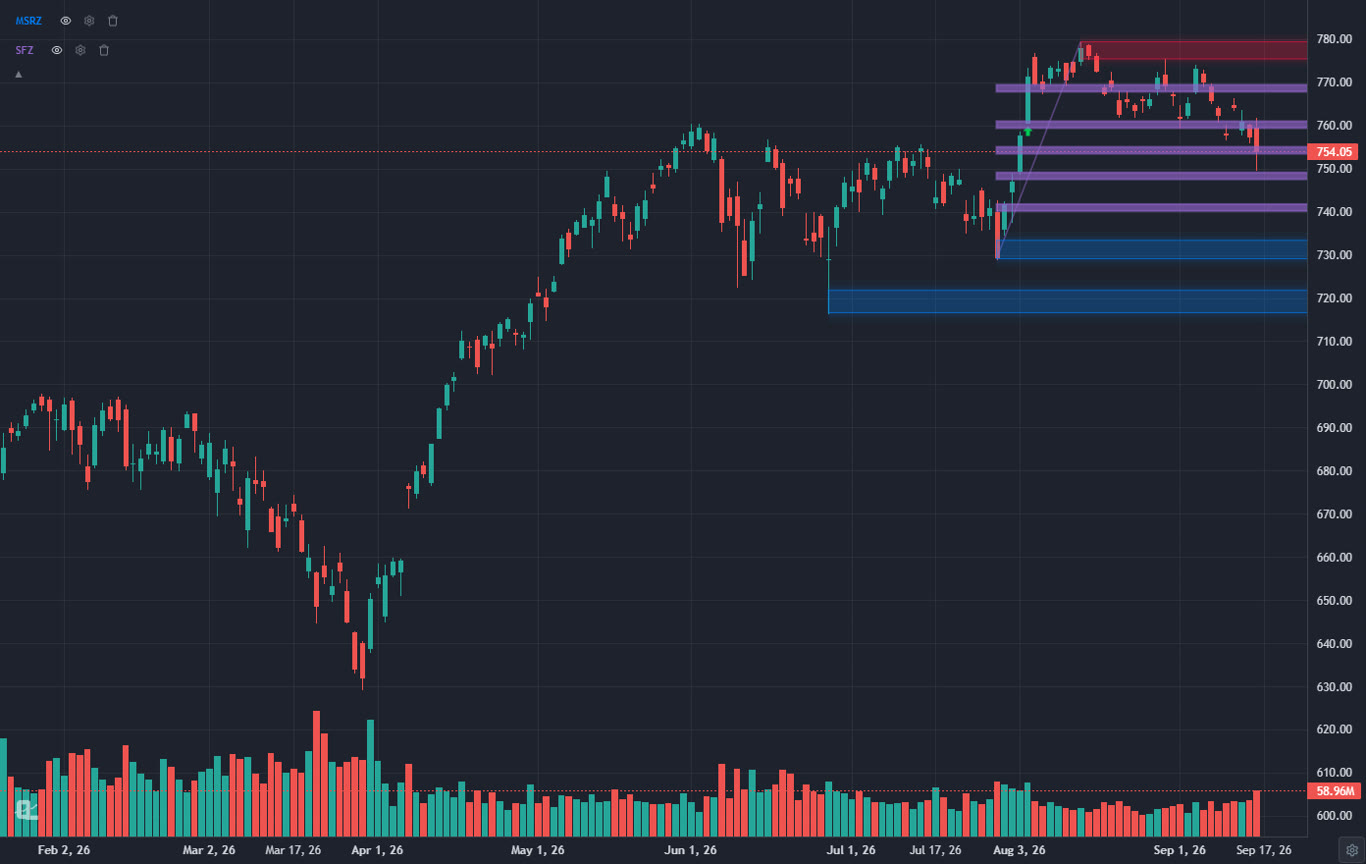
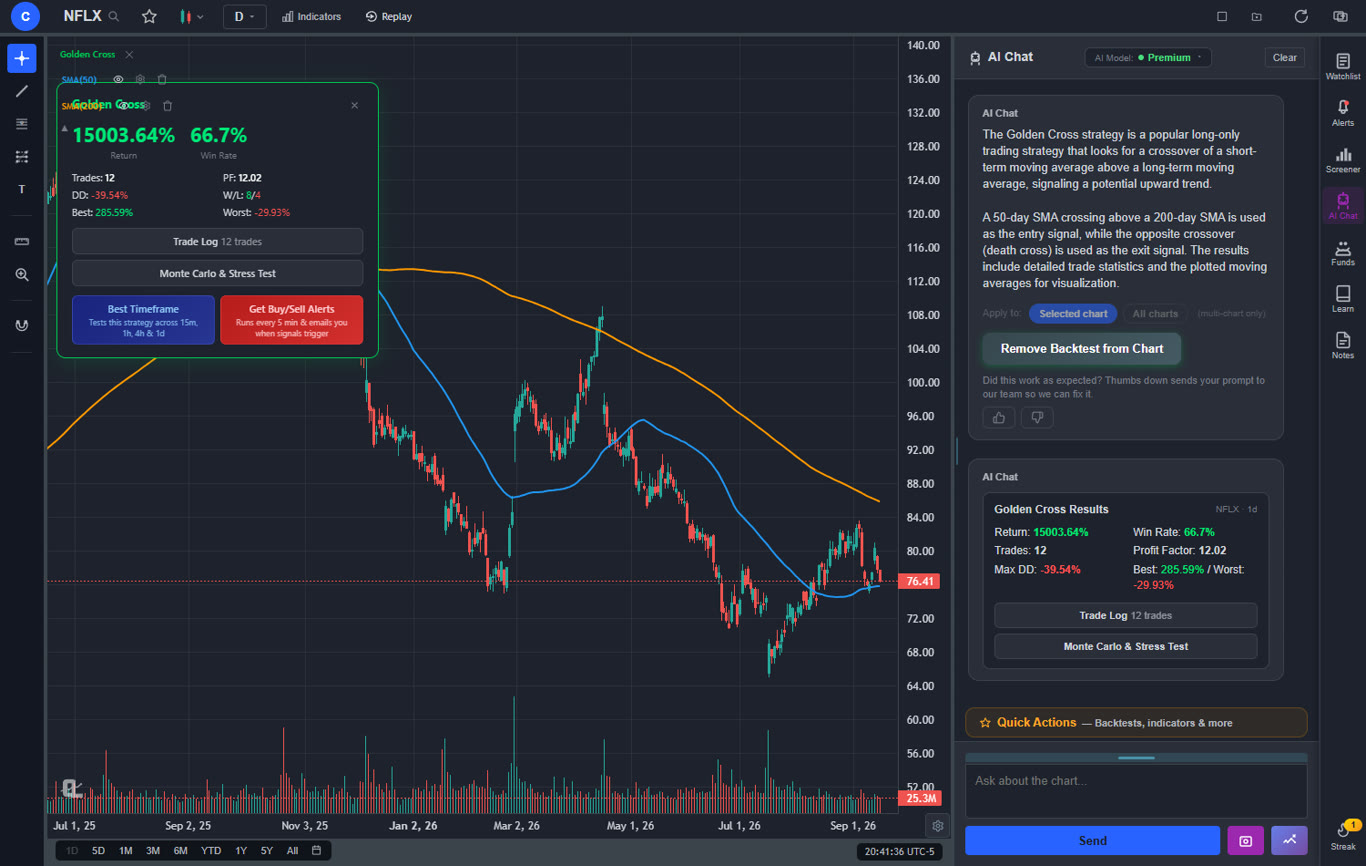
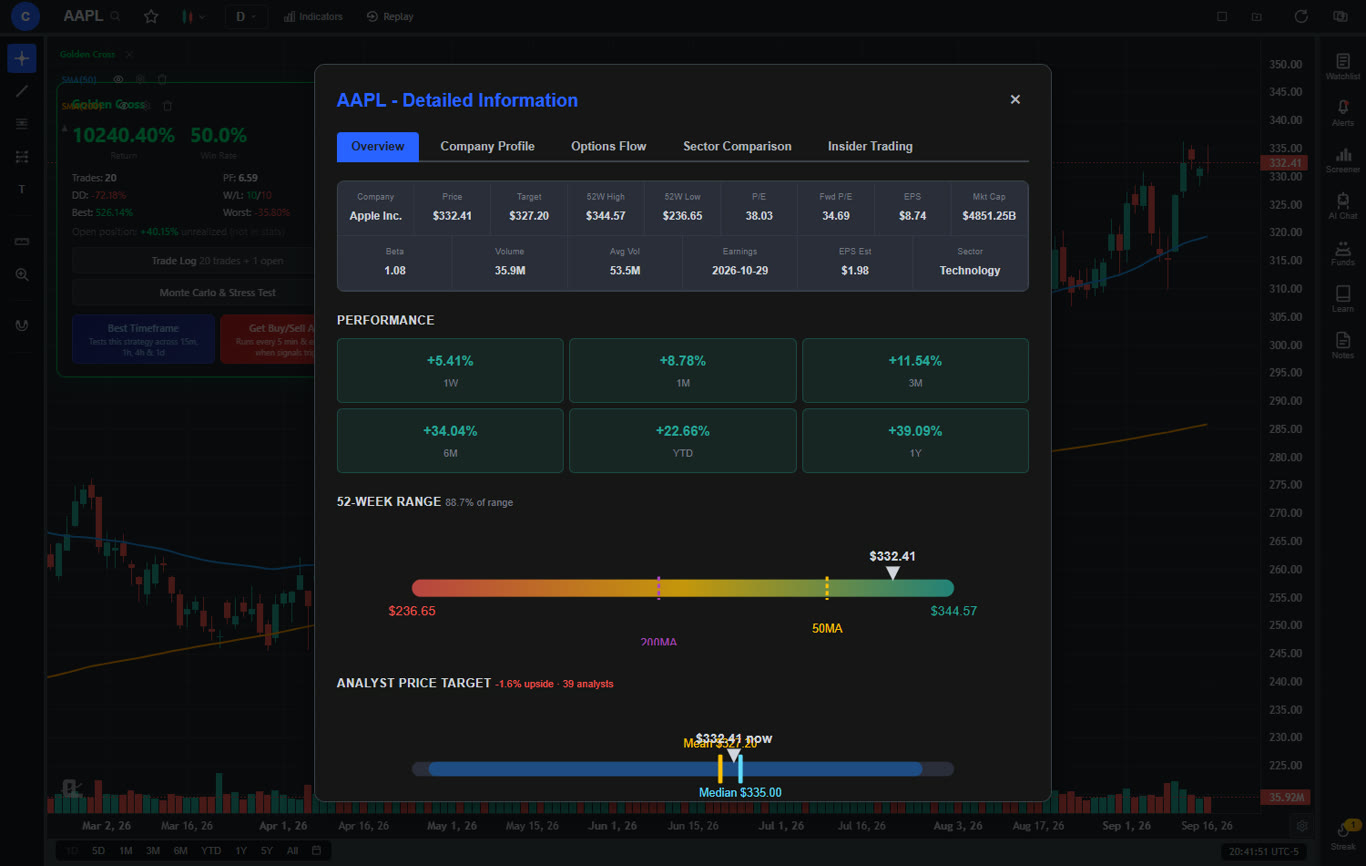
ChartingLens is an AI assisted trading platform that supports both stocks and cryptocurrencies within a single interface. It offers professional-grade crypto charting, AI-generated buy signals for crypto assets, and a built-in AI trading assistant that can analyze crypto markets, answer questions about specific tokens, and help you evaluate trade setups. The platform publishes its signal track record transparently, and a free tier makes it accessible to traders at any level. For those who want a comprehensive AI assistant for trading that covers both traditional and crypto markets, ChartingLens is a strong starting point.
TradingView
TradingView is one of the most widely used charting platforms in the crypto space. It offers extensive crypto charting capabilities with data from numerous exchanges, a large community of traders who share custom indicators and scripts, and basic AI-powered features. While TradingView does not have a built-in AI trading assistant in the same way ChartingLens does, its community-generated scripts and indicators provide a form of crowd-sourced intelligence that many crypto traders find valuable.
3Commas
3Commas specializes in automated crypto trading bots. It connects to major exchanges and allows you to set up AI-powered bots that execute trades based on a variety of strategies, including DCA (dollar-cost averaging) bots, grid bots, and signal-based bots. 3Commas is a good choice if you want to automate your crypto trading rather than use AI purely for analysis. However, it focuses more on execution automation than on the analytical side of AI assisted trading.
Cryptohopper
Cryptohopper is another AI-powered crypto trading bot platform that offers strategy design, backtesting, and automated execution across multiple exchanges. It includes AI-based signal providers and a marketplace where you can subscribe to trading strategies built by other users. Cryptohopper's strength is in its template-based approach to bot setup, which lowers the barrier to entry for traders who want automation without coding.
For most crypto traders, the ideal setup combines an analytical platform (like ChartingLens for AI signals and AI assistant capabilities) with a specialized tool for any automated execution you want to add. Start with analysis and add automation only after you have a proven, well-tested strategy.
Frequently Asked Questions
Related Articles
Start AI-Assisted Crypto Trading Free
ChartingLens combines professional crypto charting with AI signals and an AI trading assistant. Start for free -- no credit card required.
Get Started Free