Why AI Trading Tools Matter in 2026
Artificial intelligence has fundamentally changed how retail traders analyze markets. What was once reserved for quantitative hedge funds running proprietary models on million-dollar infrastructure is now available to anyone with a browser and an internet connection. In 2026, trading AI is no longer a novelty or a marketing buzzword. It is a practical category of tools -- from AI trading assistants that answer your questions in plain English to signal generators that scan thousands of stocks and deliver actionable AI trade ideas in real time.
The democratization of AI in trading has accelerated for several reasons. Computing costs have plummeted, making it feasible for smaller companies to train and deploy sophisticated machine learning models. Large language models have matured to the point where a free AI trading assistant can answer nuanced questions about stock charts, earnings data, and technical setups. And perhaps most importantly, competition among platforms has pushed the best AI trading tools to offer meaningful functionality on their free tiers, lowering the barrier to entry for traders at every experience level. Whether you are looking for a trade ideas AI platform, an AI stock trading assistant, or a comprehensive signal generator, there is a free option worth trying.
But not all AI trading tools are created equal. Some platforms deliver genuinely useful signals backed by transparent track records. Others slap the "AI" label onto basic screeners or pattern scanners and hope nobody looks too closely. If you are new to what AI assisted trading is and how it works, the landscape can feel overwhelming. This guide cuts through the noise. We tested nine of the most popular AI tools for trading, ranked them honestly, and broke down exactly what you get for free versus what sits behind a paywall. For a focused look at conversational AI tools, also see our guide to the best AI trading assistants.
What Makes a Good AI Trading Tool
Before diving into individual reviews, it helps to understand the criteria we used. Not every trader needs the same thing from an AI tool, but these six dimensions separate the genuinely useful platforms from the ones that overpromise and underdeliver.
Does the platform publish verifiable results? Transparency about historical win rates and signal performance is critical.
Can a new user understand and act on AI signals without a PhD in data science or hours of tutorials?
What does the free tier actually include, and is the paid upgrade worth the price relative to competitors?
Does the platform explain how its AI works, or is it a black box that asks you to trust it blindly?
Does the tool integrate data sources beyond basic price and volume, such as insider trades, institutional filings, or sentiment analysis?
Is the free version genuinely useful, or is it a stripped-down teaser designed to force an upgrade?
With these criteria in mind, here are the nine best AI trading tools available in 2026, ranked from our top pick to solid niche options.
9 Best AI Trading Tools Reviewed
1. ChartingLens
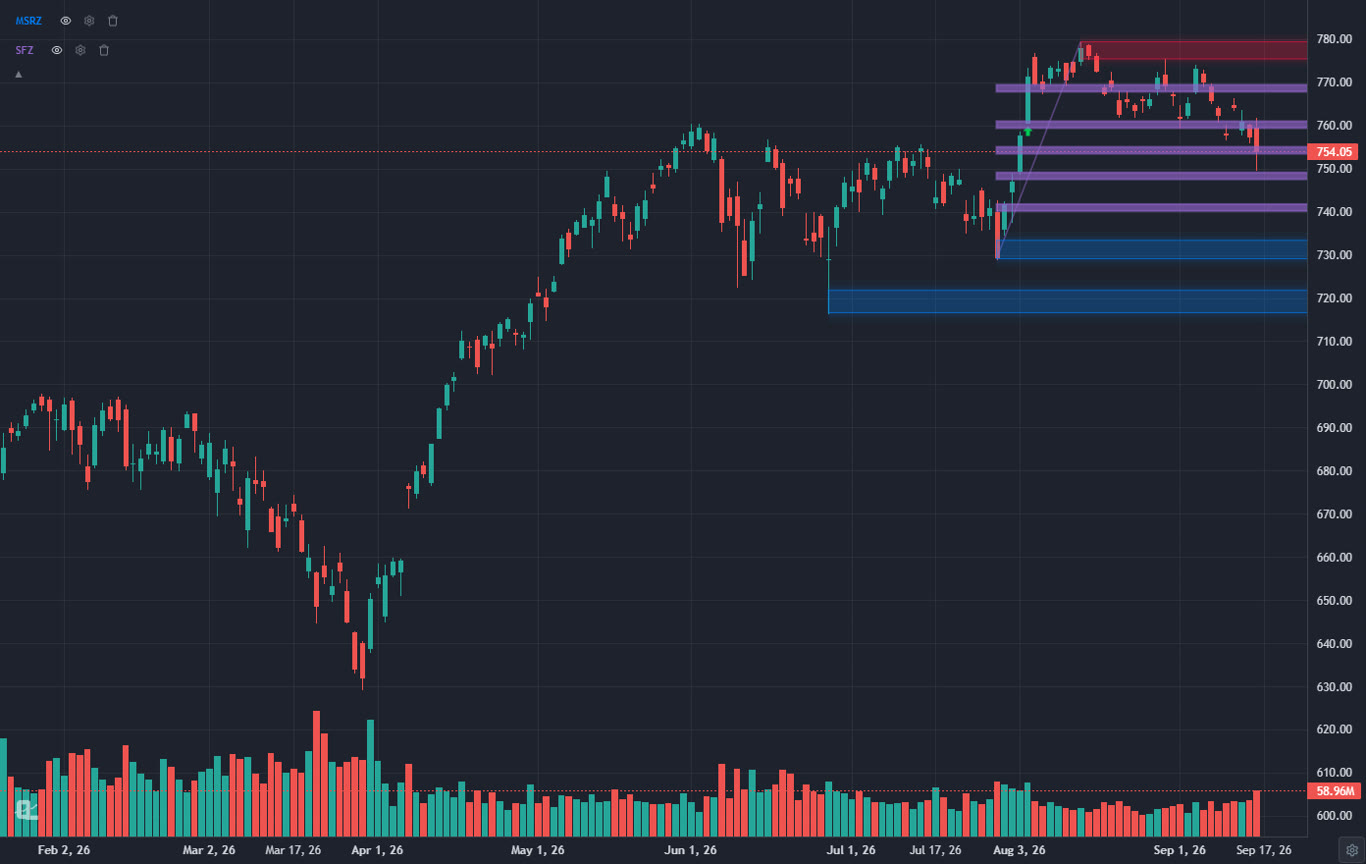
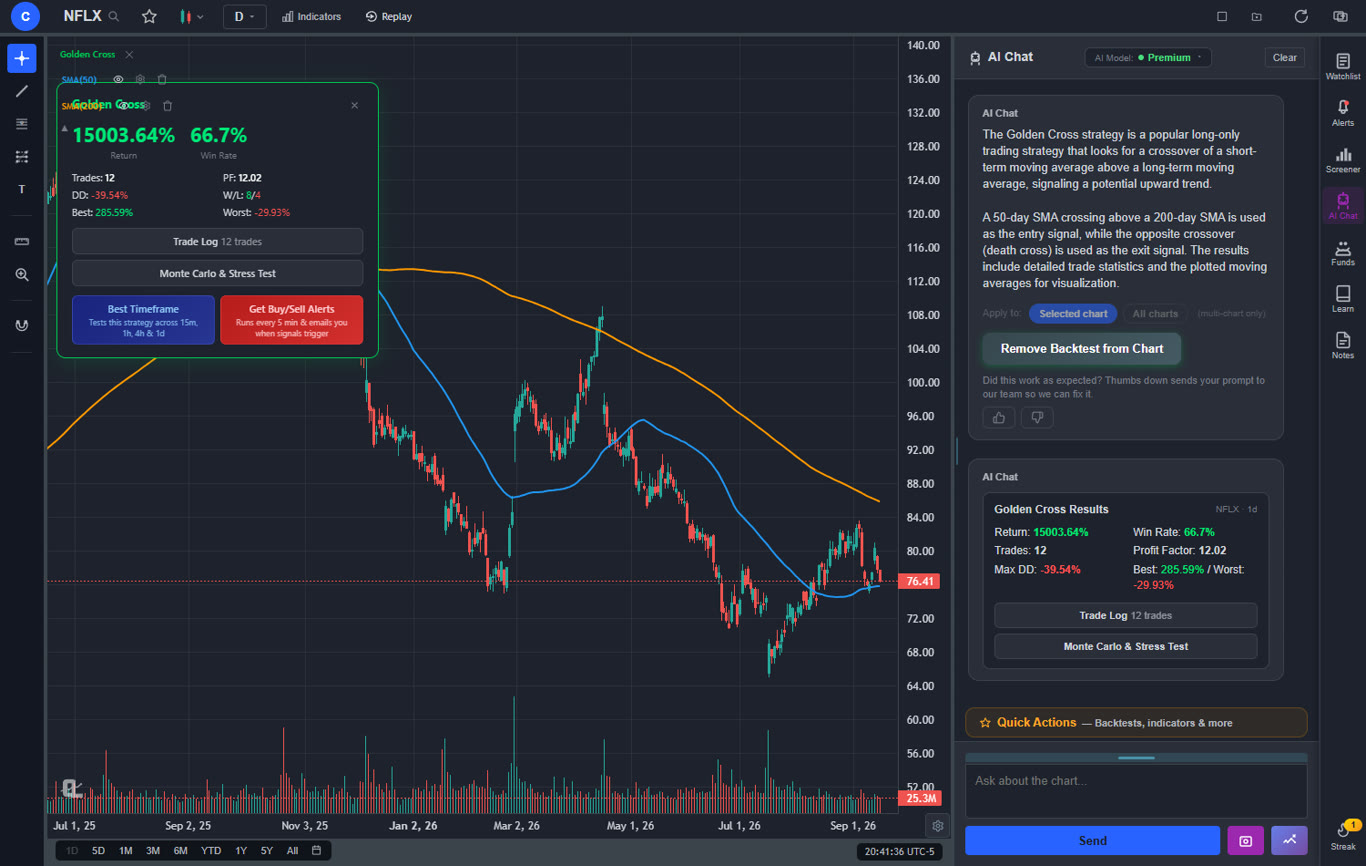
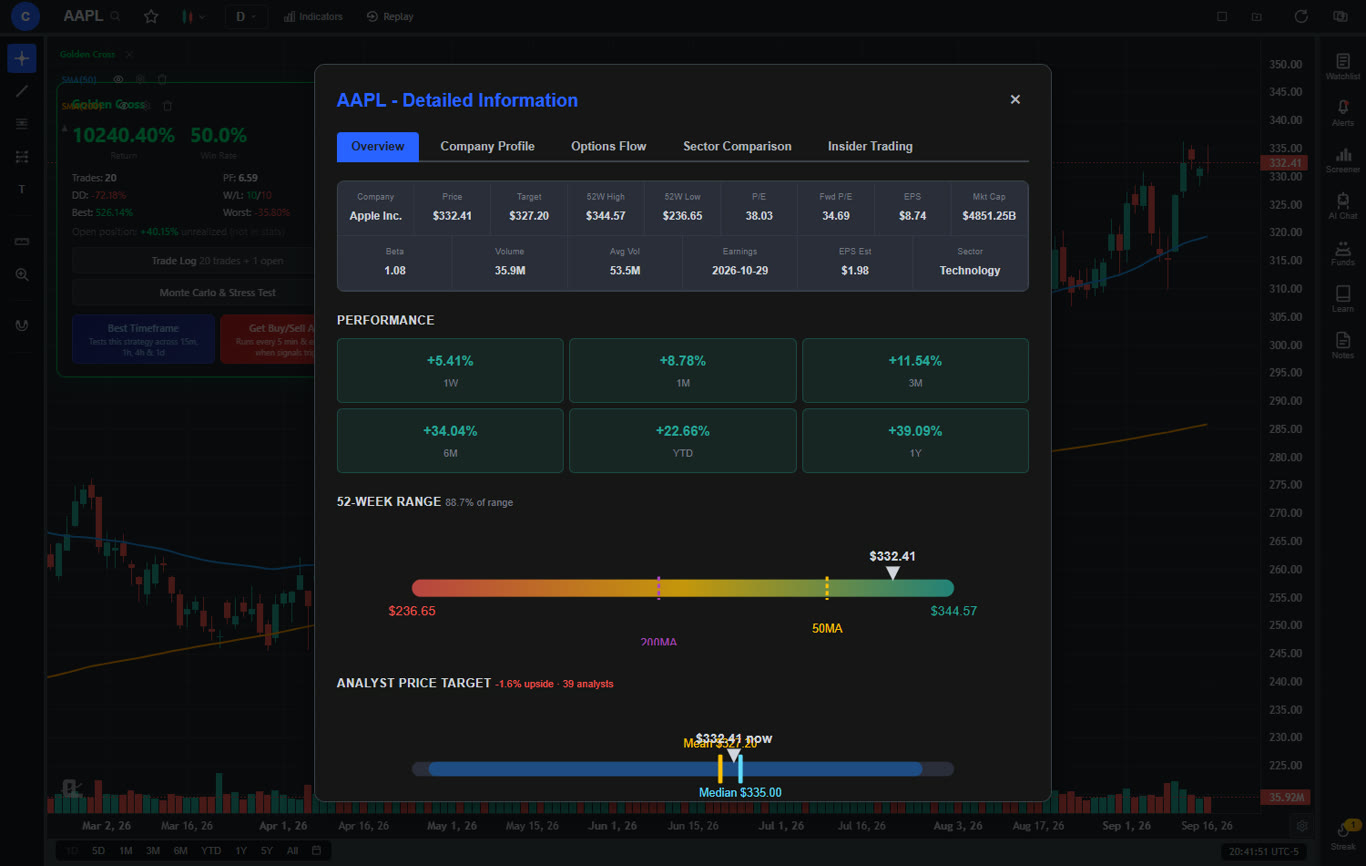
ChartingLens is a well-established trading platform with a large active user base, built from the ground up with AI at its core -- and it shows. The AI trading assistant gives verdict-first, adaptive answers instead of generic commentary. Ask "Is AAPL a buy right now?" and you get a decisive call with entry, stop, and targets. Tell it "I bought TSLA at 180 -- should I take profits?" and the hold, trim, or sell answer is anchored to your actual entry. Ask "Why did NVDA drop today?" and it surfaces the actual news behind the move, while day-trading questions come back with real session levels: opening range, premarket high and low, and VWAP. It can even evaluate an entire watchlist at once -- "Look at my Growth Watchlist and tell me which ticker is the best opportunity" -- and rank the whole list by any of 17 fundamental metrics.
The AI goes well beyond chat. Ask for "an indicator that has buy and sell signals" and the AI Signal Tournament backtests seven classic strategies on your exact chart and timeframe, ranks them by win rate, return, and profit factor, and applies the winner in one click. The institutional-grade strategy builder and institutional-grade backtesting engine run entirely in plain English -- describe a strategy in a sentence, get a full backtest with complete statistics, and let the AI find the best timeframe for it automatically. You can build custom indicators from a description ("color every candle where RSI is above 70 and volume is rising") -- the AI honors every rule you specify, down to conditional line colors -- and once a custom indicator with buy/sell signals is on your chart, you can arm an alert on it straight from the chart legend and get notified (on-screen, sound, or email on Premium) every time it prints a new signal. Premium users can also paste any Pine Script indicator and have it converted into a live native indicator. On top of that, 25 daily AI Buy Signals scan more than 2,000 stocks with entry confidence scores, win rates, and freshness badges -- all logged to a public track record anyone can audit, a level of transparency that is rare in this space.
What sets ChartingLens apart from other free AI trading tools is the integration of unique data sources. Alongside its AI features, the platform includes real-time insider trading data and hedge fund holdings via its legendary investor tracking (18 major funds, each with performance since filing and alpha versus the S&P 500), letting you see what corporate executives and legendary investors like Warren Buffett are buying or selling. Every symbol also carries a CL Score, a proprietary 0-100 AI rating. This combination of AI signals and smart money data creates a more complete picture than what most competitors offer, even on their paid tiers.
The free tier is genuinely generous -- and free forever, with no credit card required. You get 2 AI credits per day on the free AI model, free preset indicators and backtests that cost no credits, automatic support and resistance drawing, all chart types, 25+ drawing tools, live charts with a large technical indicator library, real-time data for stocks, crypto, forex, and metals across 70+ exchanges, and insider data without paying anything. Premium at $14.99 per month unlocks 20 daily credits on the premium AI model plus live web search for real-time news, earnings, and analyst data -- cheaper than nearly every other AI tool on this list -- and Pro at $29.99 per month makes AI usage unlimited. The interface is modern, clean, and runs entirely in the browser with no ads on any tier. For a deeper look at the free stock charting software landscape, we covered that in a separate guide.
Pros
- Verdict-first AI assistant with adaptive, entry-aware answers
- 25 daily AI buy signals from a 2,000+ stock scan, with a public track record
- AI Signal Tournament backtests 7 strategies on your exact chart
- Institutional-grade strategy builder and backtesting engine in plain English
- Alerts on your own custom indicators' buy/sell signals
- Insider trading data and hedge fund holdings included free
- No ads, clean modern interface; most affordable premium tier at $14.99/mo
- Pine Script conversion — paste any Pine Script indicator and it becomes a live native indicator on your chart (Premium)
- Stocks, ETFs, crypto, forex, metals, and index and commodity CFDs (US30, US500, NAS100, oil, gold) in one search bar
- Backtests include a Monte Carlo stress test and intrabar exits, built from a plain-English strategy description
- Free interactive courses drawn on real charts, plus a notes and journal panel
Cons
- Free AI chat is capped at 2 credits per day (preset indicators and backtests stay free)
- Pine Script conversion and live web search require Premium
- Analysis platform only; no brokerage integration for order execution
Our verdict: ChartingLens delivers the strongest combination of AI features, unique data, and free tier value of any platform we tested. If you want one tool that covers AI signals, smart money tracking, and chart analysis in a single interface, this is it. The free forever plan takes under a minute to set up and requires no credit card.
2. TradingView
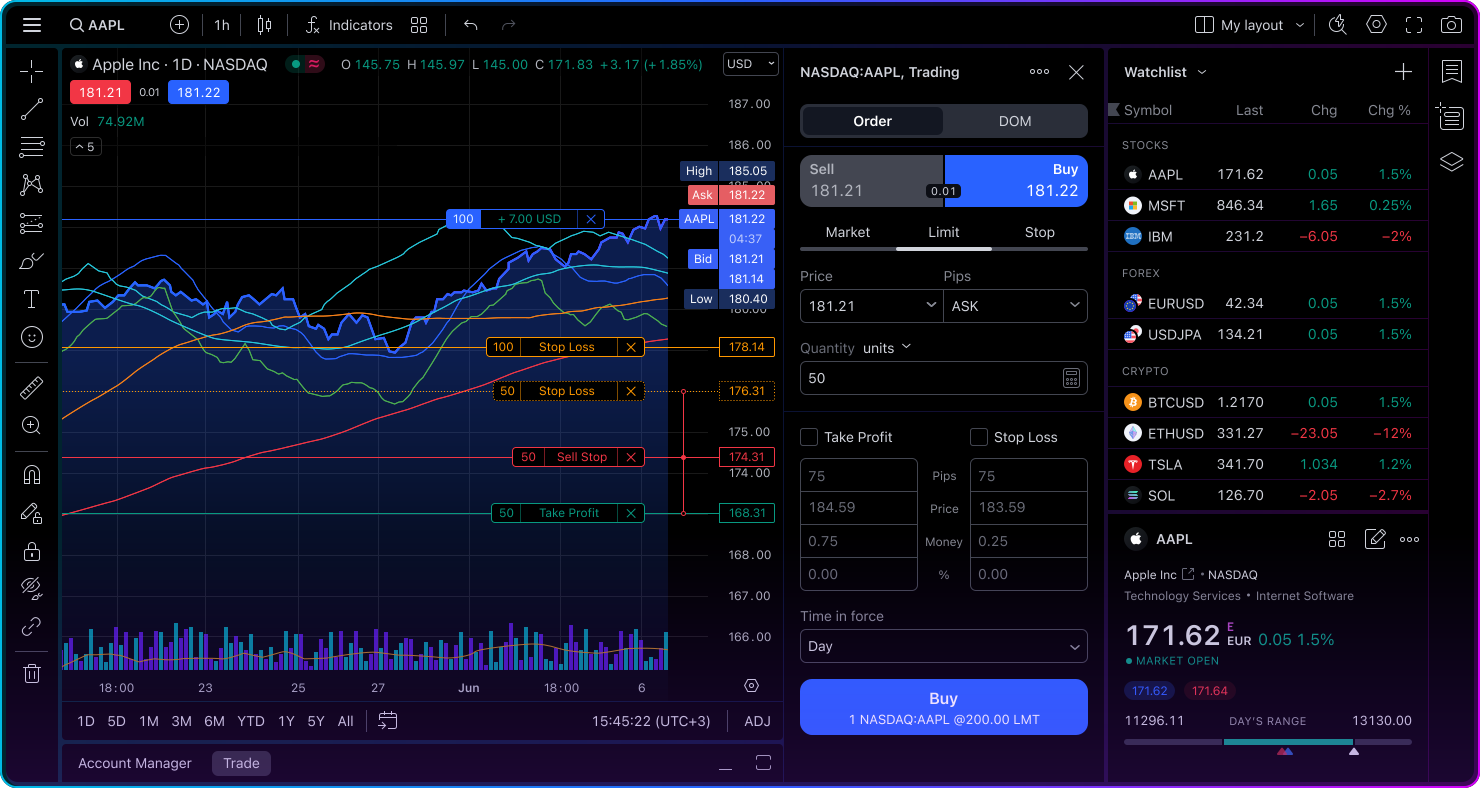
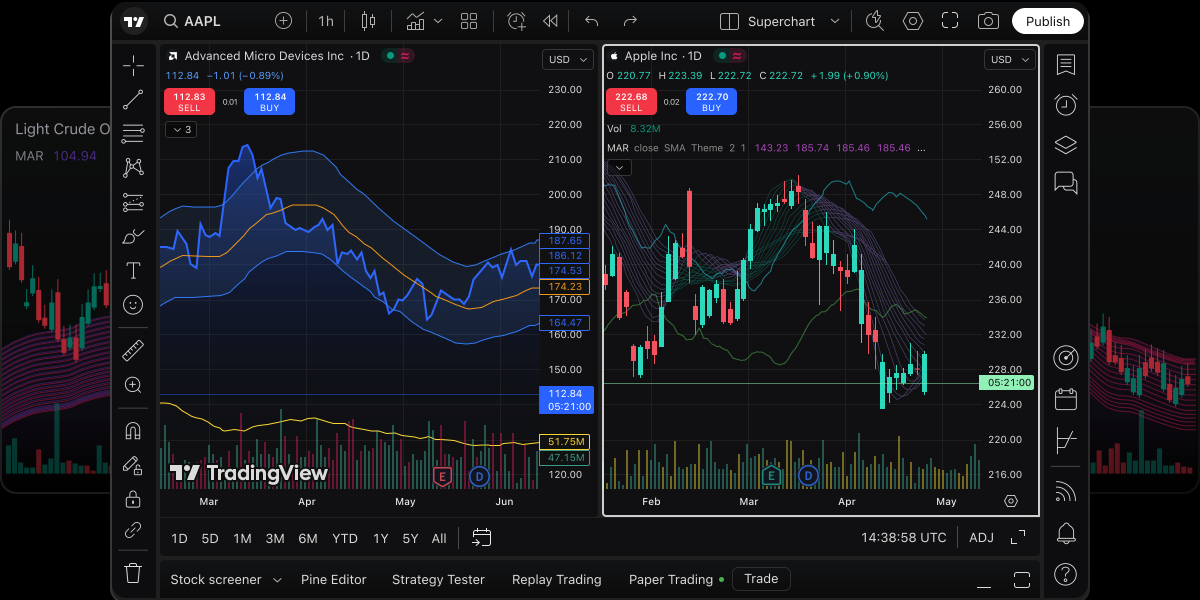
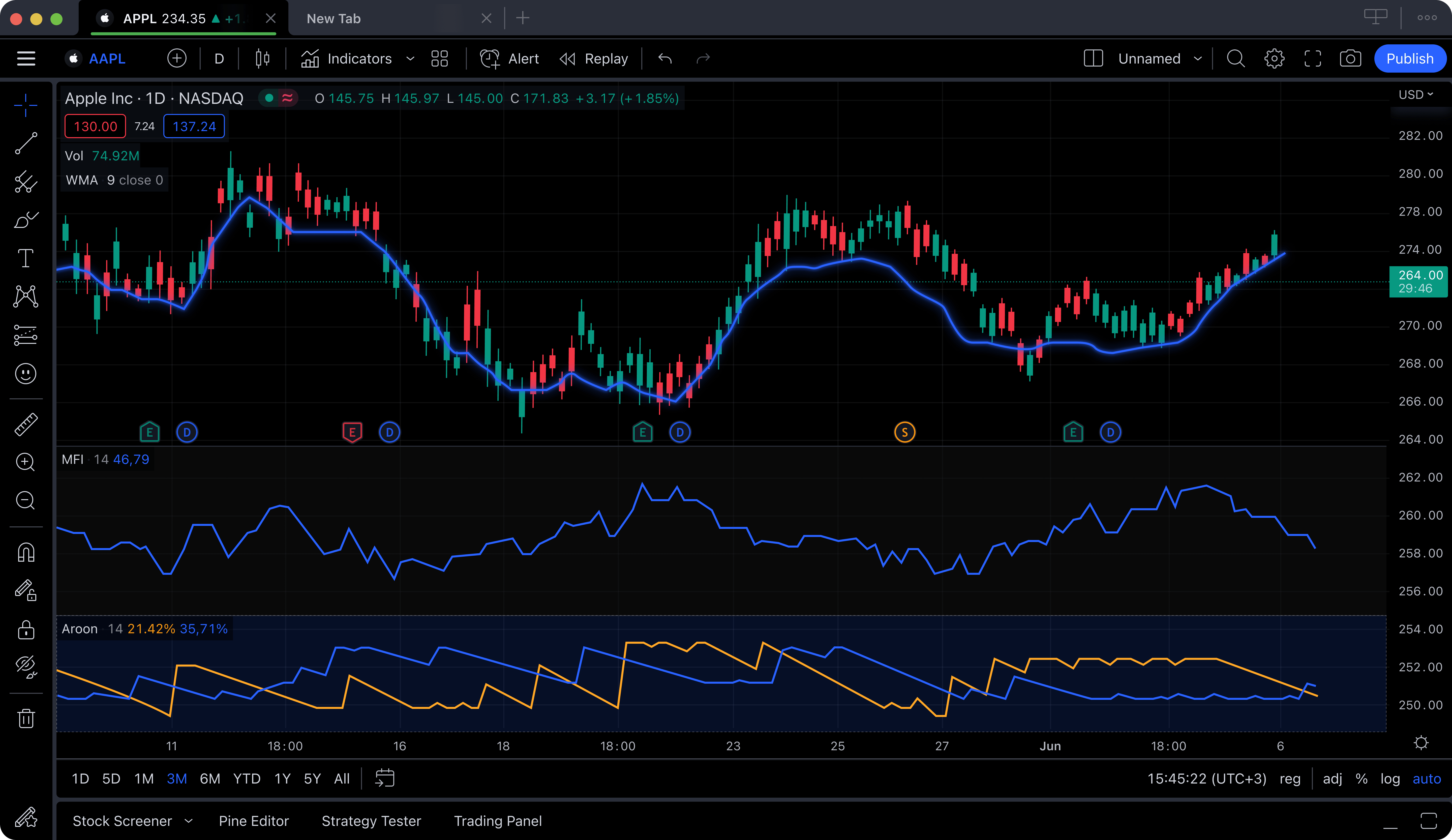
TradingView is the most widely used charting platform in the world, and for good reason. Its charts are fast, polished, and deeply customizable. The community is massive, with millions of user-published ideas and indicators. Pine Script, TradingView's proprietary scripting language, lets you build custom indicators and strategies, and some community members have published AI-adjacent scripts that incorporate machine learning concepts like moving average crossover optimization and pattern recognition.
However, it is important to be honest: TradingView does not have native AI features. There is no built-in AI assistant, no AI-generated buy signals, and no AI scoring system. The "AI" capabilities come entirely from community-created Pine Scripts, which vary wildly in quality and are not vetted by TradingView itself. If you are specifically looking for AI trading tools, TradingView is more of a canvas you build on yourself than a turnkey AI solution. The free tier also has notable limitations, including just one indicator per chart and persistent ads throughout the platform.
That said, if you are a trader who codes your own strategies and wants maximum flexibility in chart customization, TradingView remains an excellent choice. The platform's strength is its charting engine and community ecosystem, not AI. For traders who want AI signals delivered without needing to write code, other tools on this list will serve you better.
Pros
- Best-in-class charting engine and drawing tools
- Massive community with millions of shared ideas
- Pine Script for custom indicator/strategy development
- Supports stocks, crypto, forex, and futures
Cons
- No native AI features whatsoever
- Free tier limited to 1 indicator per chart
- Ads on free tier
- Community AI scripts are unvetted and inconsistent
3. Trade Ideas
Trade Ideas is one of the original AI-powered trading platforms, and its Holly AI system is genuinely impressive for active day traders. Holly runs millions of simulated trades overnight, analyzing dozens of strategies against current market conditions, and presents a curated list of high-probability trade ideas before the market opens each morning. The system adapts daily, which means the strategies it recommends shift as market volatility and sector trends change.
The quality of Holly's signals is well-regarded among professional day traders who can act on them quickly. The platform also includes real-time stock scanning, over 500 alert types, and a simulated trading environment where you can test ideas without risking capital. For traders who sit at their screens all day and trade frequently, Trade Ideas provides a level of AI-driven scanning depth that few competitors can match.
The obvious downside is cost. The Standard plan starts at $118 per month, and the Premium plan with full Holly access runs even higher. There is no free tier and no free trial of meaningful length. This makes Trade Ideas difficult to recommend for casual traders, swing traders, or anyone on a budget. The AI is strong, but you are paying a premium for it, and the platform's interface feels dated compared to more modern alternatives.
Pros
- Holly AI is one of the most sophisticated day trading signal systems
- Adapts strategies nightly based on market conditions
- 500+ alert types and powerful real-time scanning
- Simulated trading for risk-free testing
Cons
- Expensive: $118+/mo with no free tier
- Steep learning curve for new users
- Dated interface compared to modern platforms
- Primarily useful for active day traders only
4. Tickeron
Tickeron focuses on AI-driven pattern recognition and trend prediction. The platform uses neural networks to scan for classic chart patterns like head and shoulders, double bottoms, and wedges, then assigns confidence levels to each pattern based on historical accuracy. It also offers AI trend prediction that forecasts whether a stock is likely to move up or down over a specified timeframe, along with AI-powered portfolio management suggestions.
The pattern recognition engine is Tickeron's standout feature. If you are a technical trader who relies on chart patterns, having an AI that automatically identifies and rates them can save significant time. The platform also provides AI robots that simulate trading strategies, giving you an idea of how different approaches would perform without risking real money. The overall experience is more quantitative and data-heavy than some competitors, which suits analytical traders.
The free tier is limited. You can browse some AI pattern alerts, but accessing the full depth of trend predictions, portfolio tools, and AI robots requires a paid subscription starting around $50 per month. The interface, while functional, can feel cluttered and overwhelming for new users. Tickeron is a solid choice for pattern-focused technical traders, but it does not offer the breadth of AI features or the data integration that top-ranked alternatives provide.
Pros
- Strong AI pattern recognition with confidence scoring
- AI trend prediction and portfolio management
- Simulated AI trading robots for strategy testing
- Quantitative, data-driven approach
Cons
- Free tier is very limited
- Paid plans start at ~$50/mo
- Interface can feel cluttered and overwhelming
- Narrowly focused on patterns and predictions
5. Danelfin
Danelfin takes a refreshingly simple approach to AI trading. The platform assigns every stock an AI Score from 1 to 10, where higher scores indicate a greater probability of outperforming the market over the next two months. The score is generated by analyzing over 10,000 technical, fundamental, and sentiment features per stock daily. The simplicity of a single numeric score makes Danelfin one of the most approachable AI trading tools available.
The free tier lets you view AI Scores for a limited number of stocks and access basic rankings. Paid plans unlock full stock coverage, detailed breakdowns of why a stock received its score, historical AI Score performance data, and additional features like watchlists and alerts. The platform also publishes aggregate performance metrics for its scoring system, which adds a welcome layer of transparency.
Where Danelfin falls short is depth. The platform is essentially a scoring system, not a full trading toolkit. There is no charting, no AI assistant you can ask questions to, no insider data, and no screener beyond the score rankings. If all you want is a quick AI-generated opinion on whether a stock is likely to outperform, Danelfin delivers that well. But traders who need a more comprehensive set of AI tools for trading will need to pair Danelfin with another platform.
Pros
- Simple, easy-to-understand 1-10 AI scoring system
- Analyzes 10,000+ features per stock daily
- Publishes aggregate performance data
- No technical expertise required to use
Cons
- No charting, screener, or AI assistant
- Free tier limited to a small number of stocks
- Scoring only; no actionable trade setups
- Must be paired with another platform for actual trading analysis
6. TrendSpider
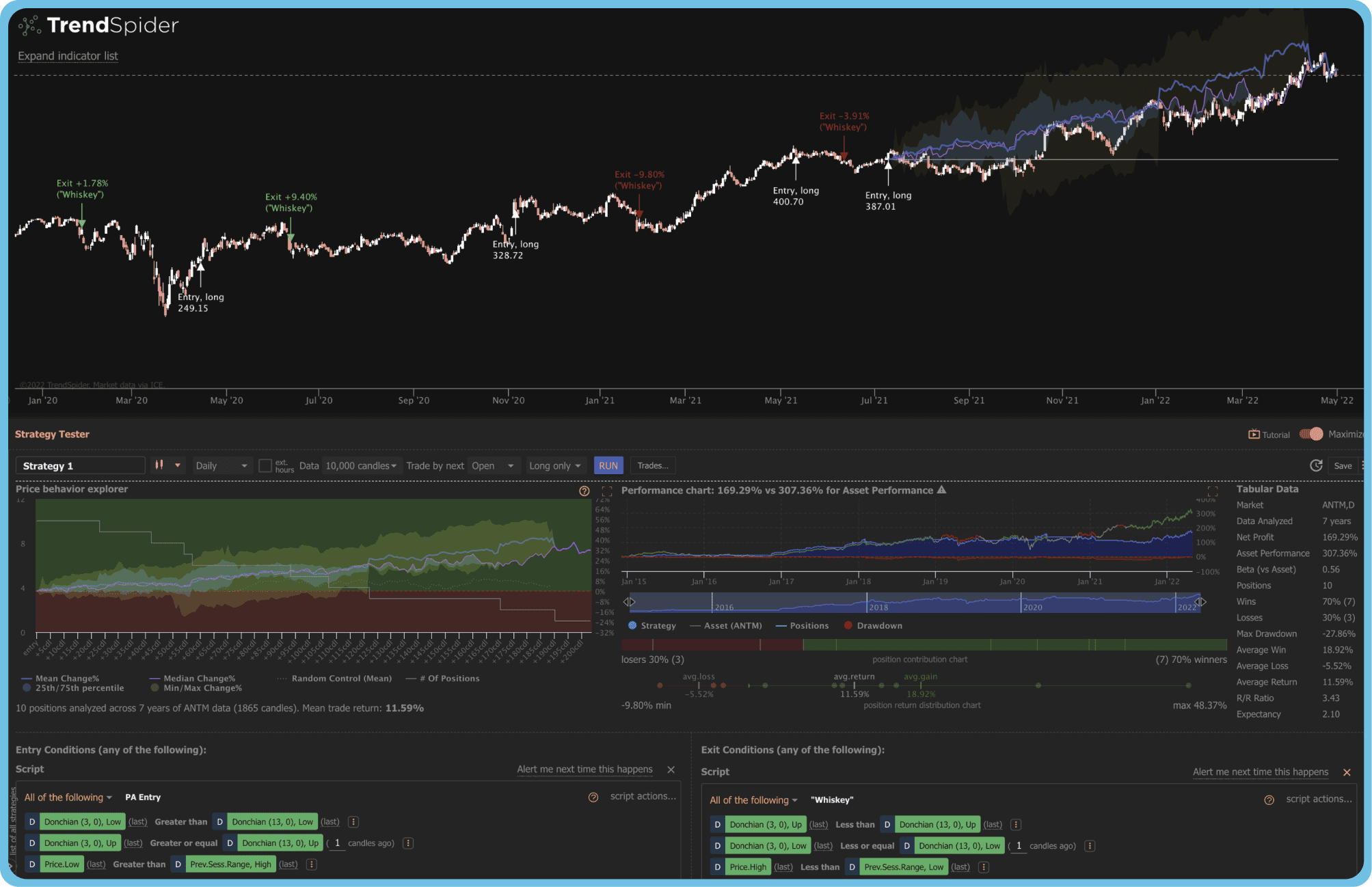
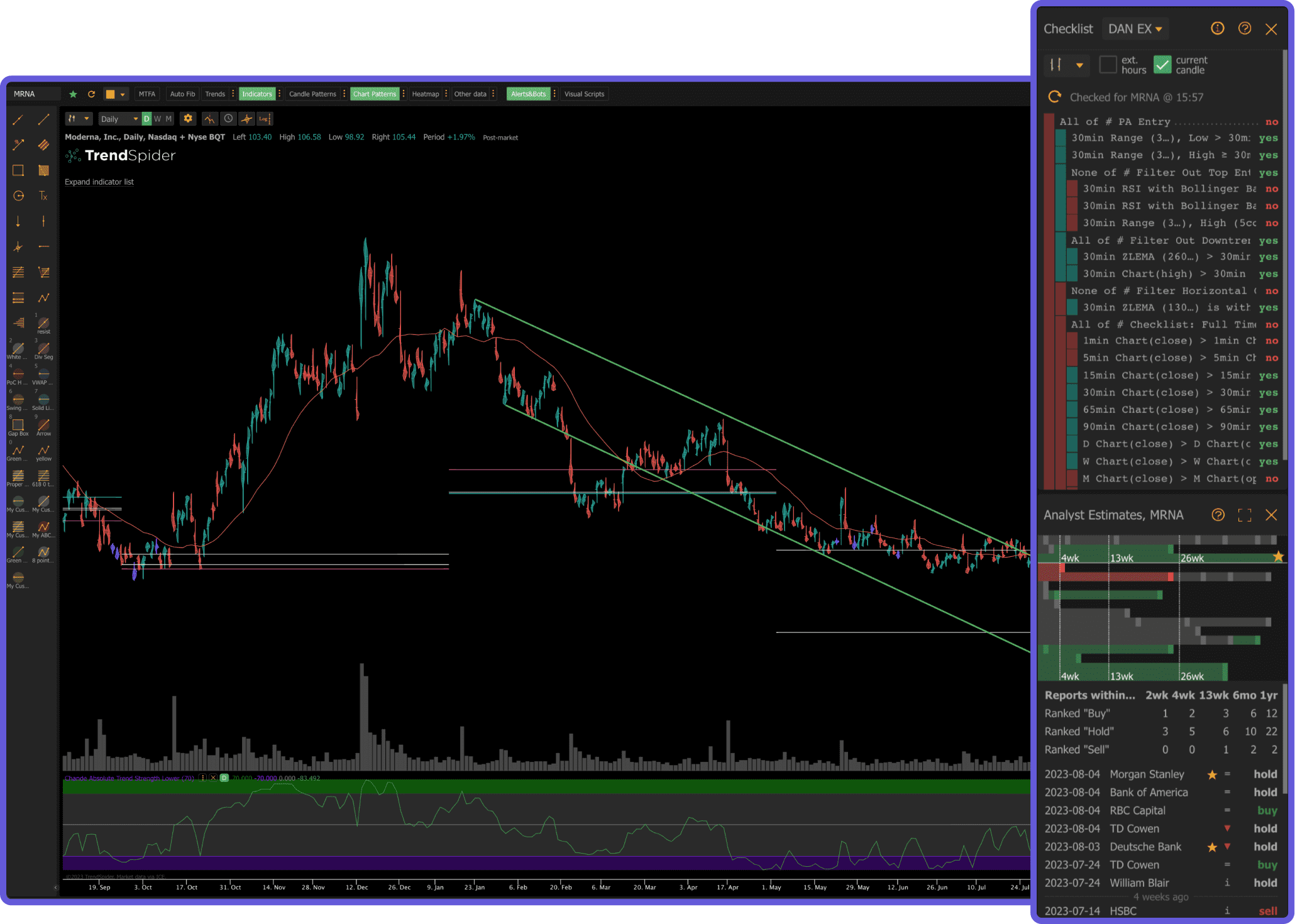
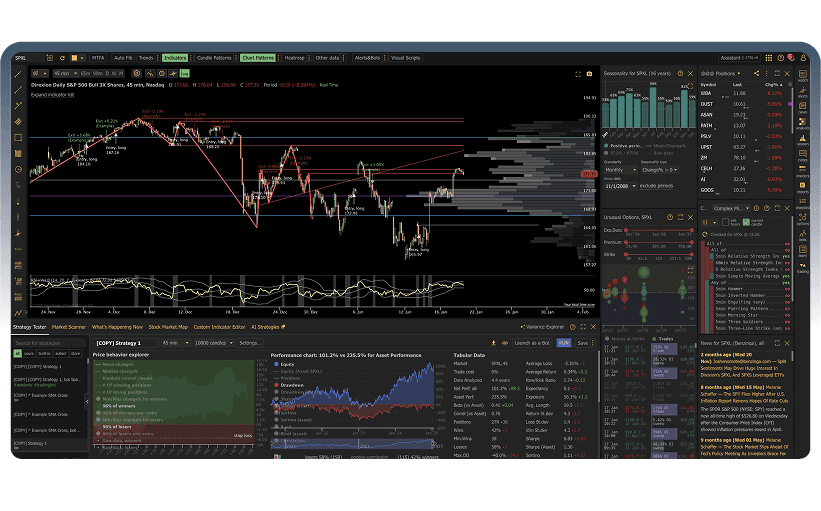
TrendSpider is a technical analysis platform that uses automation and AI to take the subjectivity out of drawing trendlines, identifying support and resistance levels, and spotting chart patterns. Its automated trendline detection scans multiple timeframes simultaneously and draws trendlines algorithmically, eliminating the bias that comes from manual charting. The platform also offers automated Fibonacci levels, candlestick pattern recognition, and multi-timeframe analysis in a single view.
The backtesting engine is another strong point. You can build and test trading strategies without writing code, using a visual strategy builder. TrendSpider also includes automated alerts based on technical conditions, dynamic price alerts that adjust with moving trendlines, and a raindrop chart type that provides a unique view of volume distribution over time. For technical analysts who want to automate repetitive charting tasks, TrendSpider delivers real time savings.
The main drawback is that TrendSpider does not offer a free tier. Plans start at $32.50 per month billed annually, which puts it in the mid-range for pricing. The AI here is more about automation of technical analysis than about generating buy or sell signals in the way that platforms like ChartingLens or Trade Ideas do. If you think of AI as "automated intelligence" applied to chart analysis rather than "predictive AI signals," TrendSpider fits the bill well.
Pros
- Automated trendline detection across multiple timeframes
- Visual strategy builder with backtesting (no code required)
- Dynamic alerts tied to moving technical levels
- Unique raindrop chart for volume analysis
Cons
- No free tier; starts at $32.50/mo
- AI is automation-focused, not predictive signal-focused
- Learning curve for the strategy builder
- No AI assistant or natural language Q&A
7. Kavout
Kavout is an AI-driven investment research platform that centers around its Kai Score, a machine-learning-generated rating for individual stocks. The Kai Score aggregates data from financial statements, analyst estimates, price momentum, and other quantitative factors to produce a predictive score. The platform is aimed more at investors who think in terms of fundamentals and quant metrics than at short-term technical traders.
Beyond the Kai Score, Kavout offers AI-generated stock picks, portfolio optimization tools, and research reports powered by its machine learning models. The platform is relatively niche and does not have the mainstream recognition of some competitors on this list, but its quantitative approach appeals to a specific audience of data-driven investors who prefer fundamental and factor-based analysis over chart patterns and technical signals.
Free access to Kavout is limited. You can explore the Kai Score for a small subset of stocks, but full access to the research tools, portfolio optimization, and AI-generated picks requires a paid plan. The interface is functional but not particularly modern, and the platform lacks charting tools, insider data, or a conversational AI assistant. Kavout is a specialized tool for fundamental and quantitative investors rather than a general-purpose AI trading platform.
Pros
- Kai Score provides a data-driven stock rating
- Strong focus on fundamental and quantitative analysis
- AI-generated research reports and stock picks
- Portfolio optimization features
Cons
- Limited free access
- No charting or technical analysis tools
- Niche platform with a smaller user base
- Interface feels dated
8. Stock Hero
Stock Hero takes a different approach to AI trading tools by focusing on automated trading bot creation. The platform lets you build, test, and deploy trading bots without writing any code. You select a strategy template, configure parameters like entry and exit conditions, and the bot runs in either paper trading mode or live trading mode connected to a supported brokerage. AI is used to optimize bot parameters and suggest strategy improvements.
The free tier includes paper trading with a limited number of bots, which makes it a good starting point for beginners who want to experiment with automated strategies without financial risk. You can see how your bots would have performed against historical data and monitor their simulated performance in real time. The platform supports multiple brokerages for live trading on paid plans, and the bot marketplace lets you browse strategies shared by other users.
The limitations are meaningful. The free tier restricts you to a small number of bots and paper trading only. The AI component is more about optimization and parameter tuning than about generating original trade ideas or signals. Stock Hero does not include charting tools, market analysis, or insider data. It is a focused tool for one specific use case: building and testing automated trading bots. If that is what you need, it is approachable and well-designed. If you need broader AI trading analysis, you will need to look elsewhere.
Pros
- No-code bot builder accessible to beginners
- Free paper trading to test strategies risk-free
- AI-assisted parameter optimization
- Bot marketplace for shared strategies
Cons
- Free tier limited to few bots and paper trading only
- No charting, market analysis, or signal generation
- AI is limited to optimization, not signal creation
- Live trading requires paid plan and brokerage connection
9. Magnifi
Magnifi positions itself as an AI-powered investment search engine. You can type natural language queries like "tech stocks with low P/E and high growth" or "companies benefiting from AI infrastructure spending" and Magnifi returns relevant investment ideas, ETFs, and stocks that match your criteria. The AI interprets your intent and maps it to actual securities, which makes it useful for discovery and brainstorming investment themes.
The research side of Magnifi is free to use, which is its strongest selling point. You can explore AI-generated investment insights, compare securities, and get plain-language explanations of complex financial concepts. The platform also offers a brokerage service for users who want to trade directly through it, but the research tools are available without an account. For casual investors who want to explore ideas using natural language rather than building complex screener filters, Magnifi is a uniquely approachable tool.
The downsides are significant if you are a serious trader. Magnifi does not offer charting, technical analysis, trading signals, or any form of real-time scanning. The AI is designed for investment research and discovery, not for timing trades or generating actionable buy and sell signals. There is no track record to evaluate because Magnifi does not make directional calls. Think of it as a smart search engine for investments rather than a trading tool. It is useful as a complement to a more comprehensive platform, but it cannot serve as your primary AI trading tool.
Pros
- Natural language investment search is intuitive
- Free research access with no account required
- Great for thematic investment discovery
- Plain-language explanations of financial concepts
Cons
- No charting, technical analysis, or trading signals
- Not designed for active traders
- No track record or signal performance data
- Research tool only; not a trading platform
Side-by-Side Comparison Table
This table compares all nine AI trading tools across the dimensions that matter most. Scroll horizontally on mobile to see all columns.