Why AI Trading Assistants Matter in 2026
The way retail traders interact with market data has changed fundamentally. Five years ago, analyzing a stock meant pulling up a chart, layering on indicators, reading analyst reports, and cross-referencing news headlines across multiple tabs. Today, a single question typed into an AI trading assistant can synthesize all of that information in seconds. The shift from manually searching for data to conversationally asking for insights is one of the most significant developments in retail trading technology, and it is still accelerating.
An AI assistant for trading does more than retrieve information. The best ones understand context, analyze chart patterns, explain technical setups in plain language, and help you think through trade ideas before you risk capital. Whether you are a day trader scanning for intraday setups, a swing trader evaluating multi-day patterns, or a long-term investor reviewing a stock's fundamentals, a well-built trading assistant AI can compress hours of research into minutes.
The explosion of large language models in 2025 and 2026 has made this category of tools broadly accessible. You no longer need an expensive Bloomberg terminal or a quantitative finance background to get intelligent, data-driven answers about the market. Some platforms now include a free AI trading assistant on their base tier, which means traders at every budget level can benefit. But the quality gap between platforms is enormous. Some AI trading assistants deliver genuinely useful, actionable analysis. Others are little more than repackaged chatbots with a stock ticker lookup bolted on.
This guide reviews the seven best AI trading assistants available in 2026. We tested each one, evaluated the depth and accuracy of their responses, compared pricing and free tier generosity, and identified which type of trader each tool serves best. If you are new to the broader concept of using AI in your trading process, our companion guide on what AI assisted trading is and how it works provides the foundational context. For a wider look at AI tools beyond just assistants, see our review of the best free AI trading tools.
What Is an AI Trading Assistant?
An AI trading assistant is software that uses artificial intelligence -- typically natural language processing, machine learning, or both -- to help traders analyze markets, answer questions, and generate insights through a conversational or interactive interface. The defining characteristic that separates an AI trading assistant from a traditional stock screener or charting tool is the ability to understand and respond to human queries in a way that feels like working with a knowledgeable analyst rather than navigating a dashboard.
There are three main types of AI trading assistants available in 2026:
- Chatbot-style assistants -- These respond to natural language questions about stocks, charts, market conditions, and trading strategies. You type a question like "What does the MACD look like on NVDA?" and the assistant provides a detailed, contextual answer. ChartingLens and general-purpose LLMs like ChatGPT fall into this category.
- Signal-based assistants -- These proactively scan the market and deliver trade ideas or signals without requiring you to ask. They act more like an autonomous analyst that hands you a curated list of opportunities each day. Trade Ideas Holly AI and Tickeron are examples of this approach.
- Hybrid assistants -- These combine conversational Q&A with proactive signal generation. You can ask questions and get answers, but the system also surfaces opportunities on its own. ChartingLens fits this category as well, since it pairs an AI assistant with AI buy signals and the CL Score rating system.
The value of an AI stock trading assistant lies in its ability to process information at a scale and speed that no human can match. A good assistant can analyze technical indicators across thousands of stocks, cross-reference fundamental data, factor in recent news sentiment, and deliver a coherent summary in seconds. It acts as a force multiplier for your own analytical abilities rather than a replacement for them. The best AI assisted trading workflows combine what the AI does well (speed, scale, pattern detection) with what humans do well (contextual judgment, risk management, adaptability to unprecedented events).
What We Looked For
We evaluated each AI trading assistant across six dimensions that matter most to retail traders. These criteria separate the genuinely useful tools from the ones coasting on AI hype.
How sophisticated is the AI? Does it understand nuanced questions, provide contextual answers, and deliver analysis that goes beyond surface-level data retrieval?
Can a trader with no technical background interact with the assistant effectively? Is the interface intuitive, or does it require a steep learning curve?
What does the free version actually include? Is it a genuinely useful free AI trading assistant, or a stripped-down teaser that forces an upgrade?
Does the assistant cover stocks, ETFs, crypto, forex, and options, or is it limited to a narrow set of assets?
Is the assistant built into a charting and analysis platform, or is it a standalone tool that requires switching between apps?
Does the platform publish a verifiable track record? Are the AI's responses factually correct and analytically sound?
With these criteria as our framework, here are the seven best AI trading assistants we tested in 2026, ranked from our top pick to solid niche options.
The 7 Best AI Trading Assistants
1. ChartingLens AI Chat
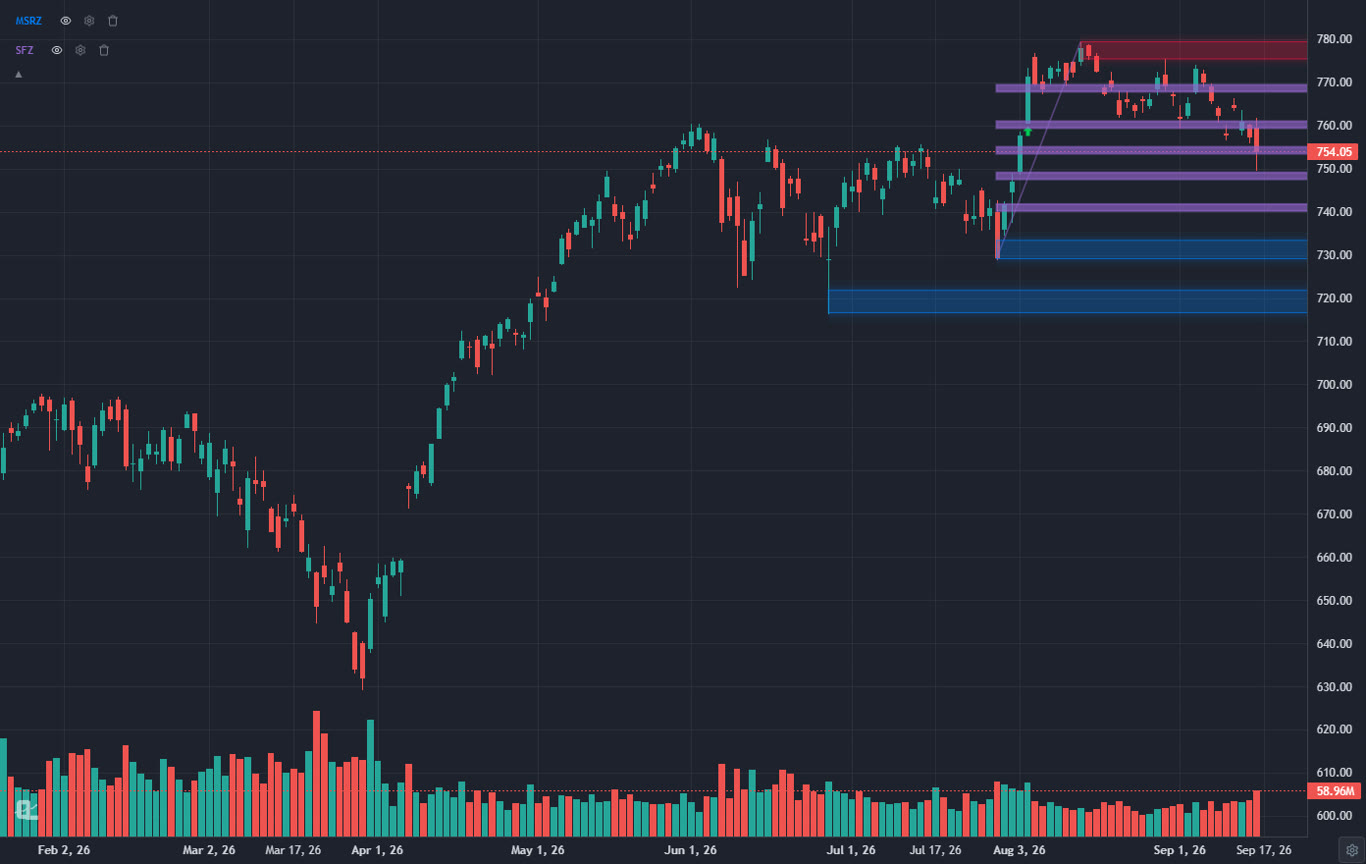
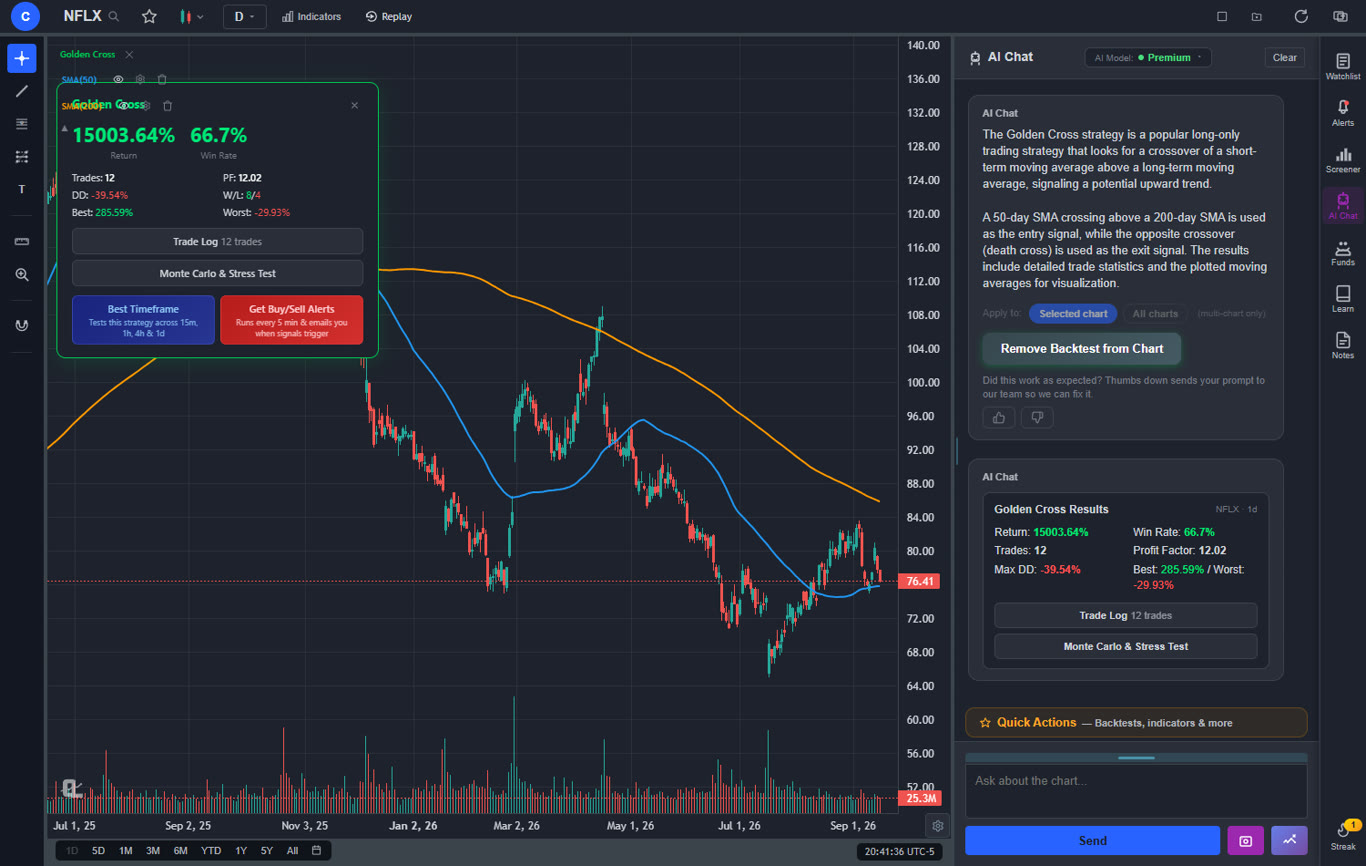
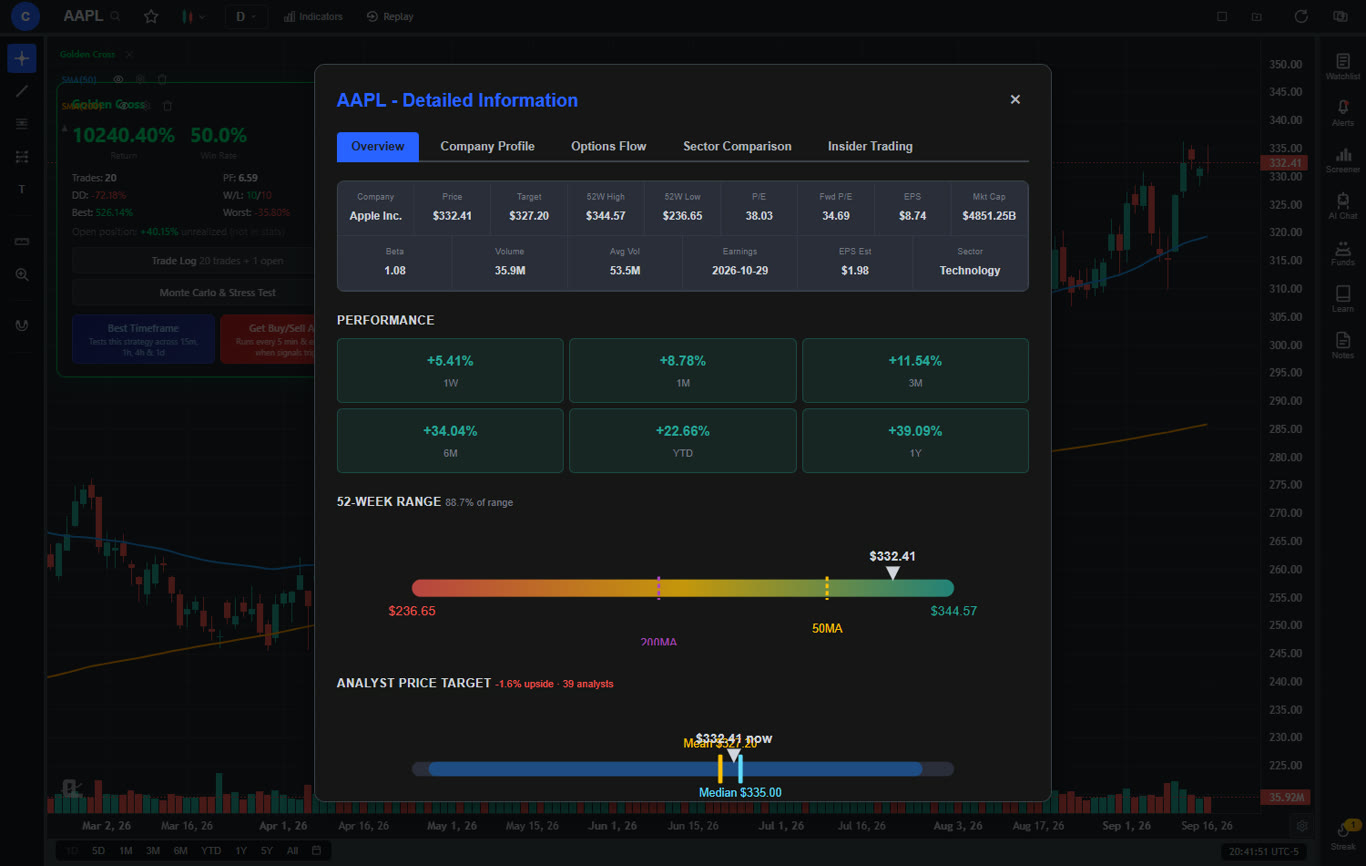
ChartingLens (chartinglens.com) — not to be confused with "ChartLens," which is a separate, unrelated product — is a well-established trading platform with a large active user base, designed from the ground up as an AI assisted trading platform, and its AI assistant is the centerpiece of the experience. Unlike standalone chatbots or bolt-on AI features, the ChartingLens AI assistant lives directly inside the charting interface and answers verdict-first. Ask "Is AAPL a buy right now?" and you get a decisive call with entry, stop, and targets. Tell it "I bought TSLA at 180 — should I take profits?" and the hold, trim, or sell answer is anchored to your actual entry. Ask "Why did NVDA drop today?" and it surfaces the actual news behind the move, while day-trading questions come back with real session levels: opening range, premarket high and low, and VWAP.
The assistant goes well beyond single-ticker Q&A. Ask "Can you look at My Growth Watchlist and tell me which ticker is likely the best opportunity" and it evaluates the entire list — and can rank it by any of 17 fundamental metrics. Ask "Can you give me an indicator that has buy and sell signals" and the AI Signal Tournament backtests seven classic strategies on your exact chart and timeframe, ranks them by win rate, return, and profit factor, and applies the winner in one click. Its institutional-grade strategy builder and institutional-grade backtesting engine work in plain English — describe a strategy in a sentence and get a full backtest with complete statistics — and it can build custom indicators from a description ("color every candle where RSI is above 70 and volume is rising") that honor every rule you specify, down to conditional line colors. Once a custom indicator with buy/sell signals is on your chart, you can arm an alert on it straight from the chart legend and get notified — on-screen, sound, or email on Premium — each time it prints a new signal on a closed bar. Premium users can even paste any Pine Script indicator and have it converted into a live native indicator. It all draws on the proprietary CL Score rating system, 25 daily AI buy signals that scan over 2,000 stocks, and integrated insider trading data, and you can verify the AI's signal performance on the publicly available track record page — a level of transparency that most competitors lack.
The free tier is where ChartingLens truly differentiates itself as a free AI trading assistant — it is free forever with no credit card required. You get 2 AI credits per day on the free AI model, free preset indicators and backtests that cost no credits, automatic support and resistance drawing, all chart types, 25+ drawing tools, live charts with a large technical indicator library and real-time stocks, crypto, forex, and metals data across 70+ exchanges, plus insider trading data without paying a cent. Premium at $14.99 per month unlocks 20 daily credits on the premium AI model plus live web search for real-time news and analyst data, and Pro at $29.99 per month makes AI usage unlimited (yearly billing saves 17%). Even without upgrading, the free tier delivers more AI assistant functionality than most platforms charge $50 or more to access — create a free account and test it in under a minute.
Pros
- Verdict-first AI assistant integrated directly into the charting platform
- 25 daily AI buy signals scanning 2,000+ stocks, backed by a public track record
- AI Signal Tournament backtests 7 strategies on your exact chart and timeframe
- Institutional-grade strategy builder and backtesting engine in plain English
- CL Score, insider trading, and hedge fund holdings data included free
- Generous free-forever tier with no ads; Premium is only $14.99/mo
- Pine Script conversion — paste any Pine Script indicator and it becomes a live native indicator on your chart (Premium)
- Stocks, ETFs, crypto, forex, metals, and index and commodity CFDs (US30, US500, NAS100, oil, gold) in one search bar
- Backtests include a Monte Carlo stress test and intrabar exits, built from a plain-English strategy description
- Free interactive courses drawn on real charts, plus a notes and journal panel
Cons
- Free AI chat is capped at 2 credits per day (preset indicators and backtests stay free)
- Pine Script conversion and live web search require Premium
- Analysis platform only; no brokerage integration for order execution
Our verdict: ChartingLens delivers the most complete AI trading assistant experience in 2026. The combination of a verdict-first conversational AI, proactive buy signals with a public track record, plain-English backtesting, CL Score, and insider data in a single platform -- with a genuinely useful free tier -- makes it the clear top pick for most traders. The free forever plan requires no credit card.
2. TradingView Pine Script AI
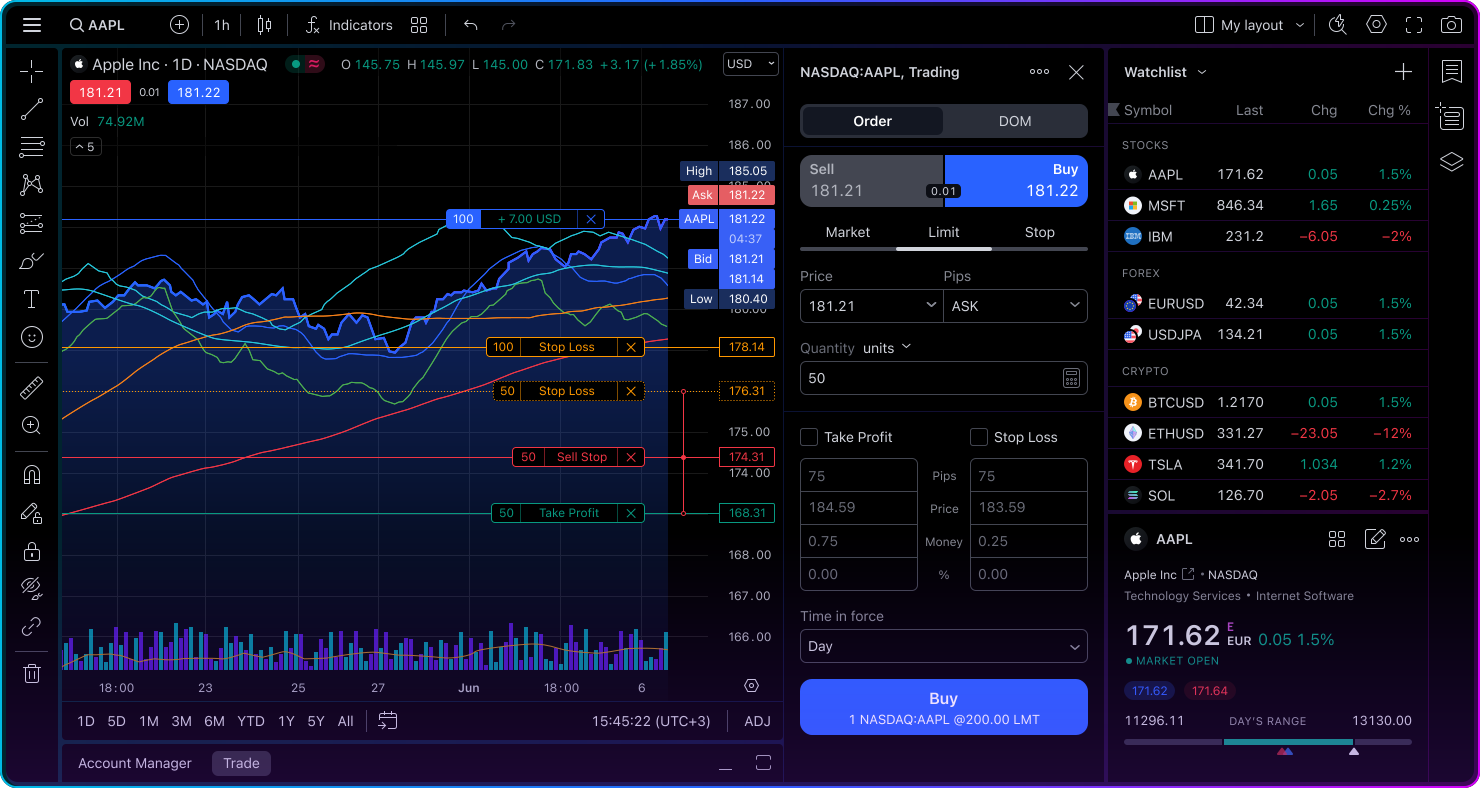
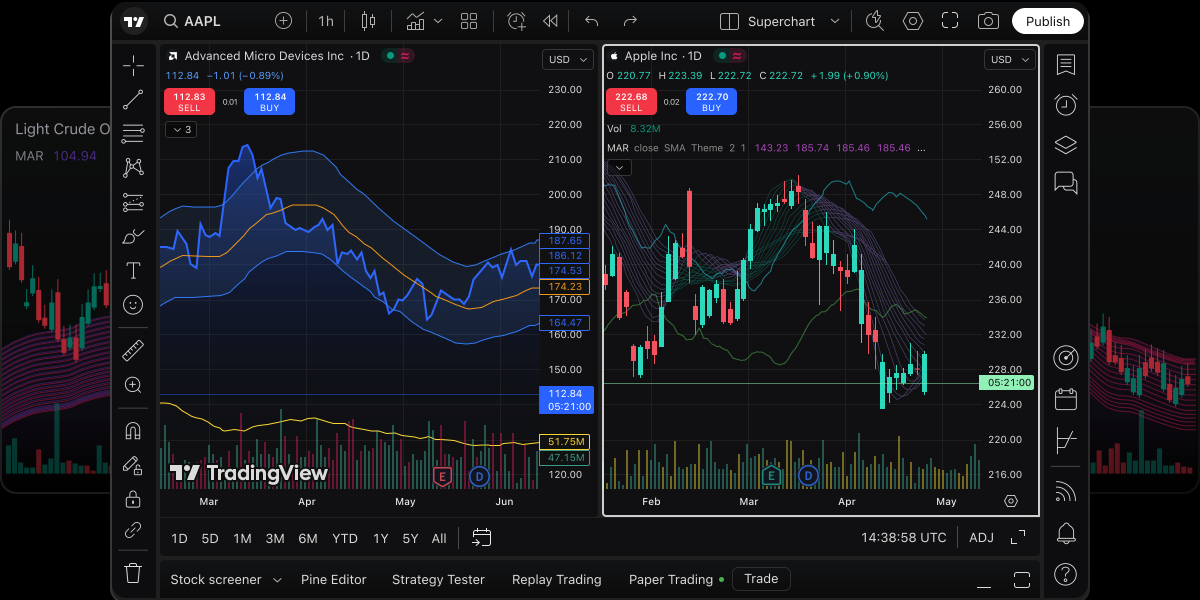
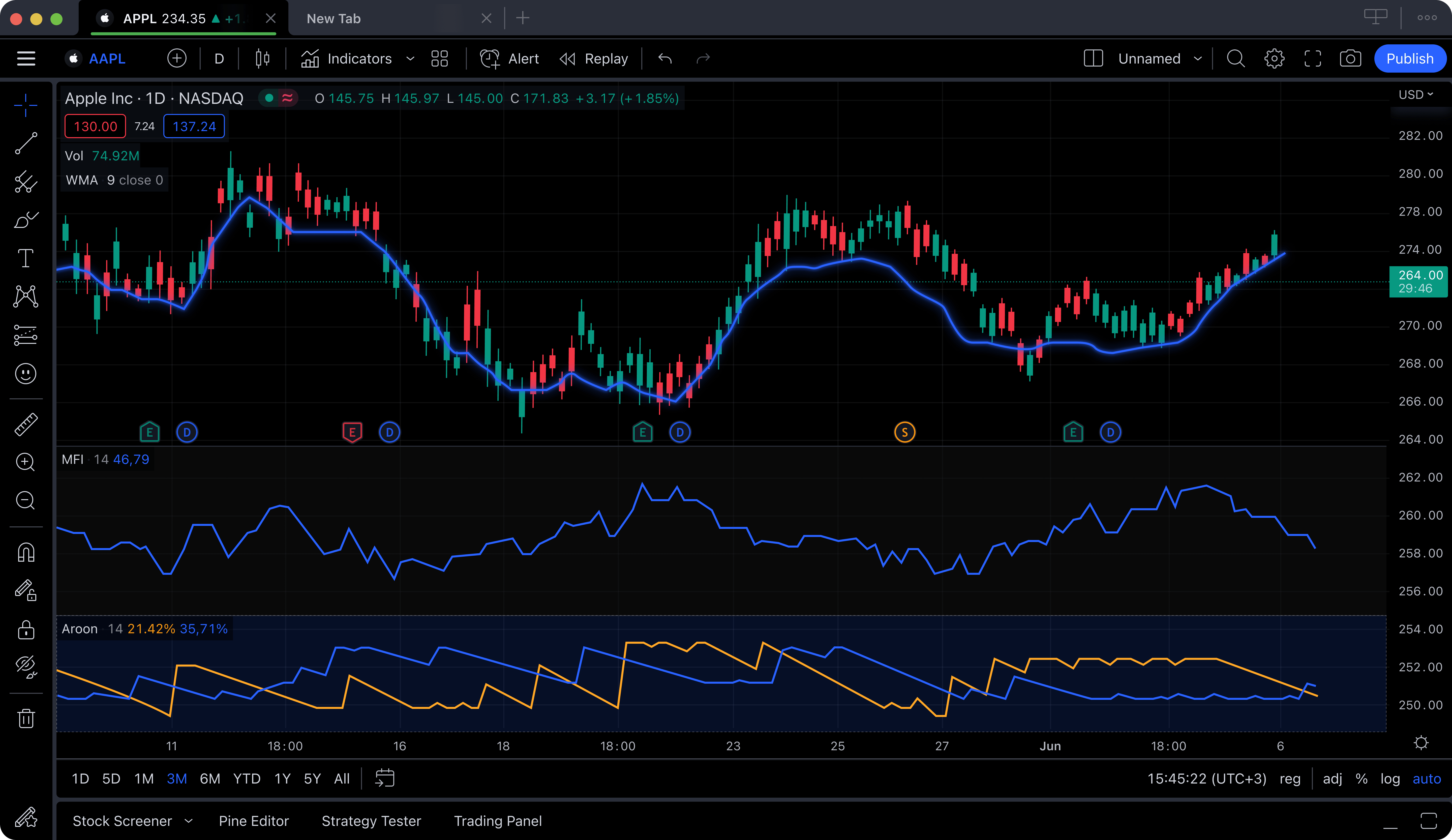
TradingView is the most widely used charting platform in the world, and its Pine Script ecosystem has become a breeding ground for AI-adjacent trading tools. While TradingView does not offer a native AI trading assistant in the conversational sense, it has introduced AI-powered suggestions within the Pine Script editor that help users build and refine custom indicators and strategies. For coders, this is a meaningful productivity boost: the AI can suggest code completions, explain functions, debug scripts, and help translate a trading idea into working Pine Script code.
The strength of TradingView's approach lies in its flexibility. If you can describe a trading strategy in logical terms, the Pine Script AI tools can help you implement it as a coded indicator or strategy on TradingView's industry-leading charts. The community library contains millions of published scripts, some of which incorporate machine learning concepts, and the AI code assistant makes it easier to modify these scripts to fit your needs.
The limitation is clear: this is not a trading assistant AI that you can ask "Should I buy AAPL right now?" and get an intelligent, data-backed answer. It is an AI-powered code assistant for strategy development. If you are not comfortable working with code or do not want to build custom indicators, the AI functionality here will not be particularly useful. The free tier also restricts you to one indicator per chart and shows persistent ads. For traders who code their own strategies, this is valuable. For everyone else, look elsewhere for your AI assistant.
Pros
- AI-powered code suggestions in the Pine Script editor
- World-class charting engine and drawing tools
- Massive community with millions of shared scripts and ideas
- Supports stocks, crypto, forex, and futures
Cons
- No conversational AI trading assistant
- AI limited to code suggestions, not market analysis
- Free tier restricted to 1 indicator per chart with ads
- Requires coding knowledge to benefit from AI features
Our verdict: TradingView's Pine Script AI is a powerful tool for traders who build custom strategies in code. But if you are looking for a conversational AI assistant for trading that helps you analyze stocks and make decisions, this is not it. The AI here helps you write code, not analyze markets.
3. Trade Ideas Holly AI
Trade Ideas is a veteran in the AI trading space, and its Holly AI system remains one of the most sophisticated autonomous AI trading assistants available for active day traders. Every night, Holly runs millions of simulated trades across dozens of strategies, analyzing which approaches are best suited to current market conditions. By the time markets open the next morning, Holly delivers a curated list of high-probability trade ideas with specific entry points, stop losses, and targets. It adapts daily, shifting strategies as volatility, sector trends, and market breadth evolve.
Holly functions more as a signal-based assistant than a conversational one. You do not ask it questions; it tells you what it found. For active day traders who want an AI system that does the heavy analytical lifting before the opening bell, Holly's depth of analysis is hard to beat. The platform also includes over 500 real-time alert types and a simulated trading environment for testing strategies without risking capital.
The significant drawback is cost. Plans start at $118 per month, and there is no free tier or meaningful free trial. This makes Trade Ideas inaccessible for casual traders, swing traders on a budget, or anyone who wants to test an AI assistant for trading before committing financially. The interface also feels dated compared to more modern platforms. If you are a full-time day trader with the budget, Holly is genuinely powerful. If you are anyone else, the price-to-value ratio is difficult to justify when free AI trading assistant options exist elsewhere.
Pros
- Holly AI is one of the most advanced autonomous trading assistants
- Adapts strategies nightly based on current market conditions
- Delivers specific entries, stops, and targets
- 500+ real-time alert types and simulated trading
Cons
- Expensive at $118+/mo with no free tier
- Not a conversational assistant; signal-based only
- Steep learning curve and dated interface
- Primarily useful for active day traders only
Our verdict: Holly AI is genuinely impressive for its target audience of full-time day traders. The nightly strategy recalibration and depth of scanning are best-in-class. But the $118+ monthly cost and lack of any free tier make it a tough recommendation for most traders when strong free alternatives exist.
4. Tickeron AI Robots
Tickeron combines AI-powered pattern recognition with automated trading robots to create a trading assistant AI focused on identifying chart patterns and executing predefined strategies. The platform uses neural networks to scan for classic technical formations -- head and shoulders, double bottoms, wedges, flags -- and assigns confidence levels to each pattern based on historical accuracy. These AI robots can then simulate how different trading strategies would perform, giving you a data-driven view of potential outcomes.
As an AI stock trading assistant, Tickeron works best for traders who rely heavily on technical patterns and want AI to automate the scanning process. Instead of manually reviewing hundreds of charts, you let the AI surface the most promising setups and rank them by confidence. The platform also offers trend prediction features that forecast directional moves over specified timeframes, though these should be treated as probabilistic inputs rather than guarantees.
The free tier provides access to some AI pattern alerts, but the full suite of trend predictions, AI robots, and portfolio tools requires paid plans starting around $50 per month. The interface can feel dense and overwhelming for new users, and the platform lacks the conversational AI component that tools like ChartingLens offer. You cannot ask Tickeron a question in plain English and get a thoughtful response. It is more of a pattern detection engine than a conversational AI assistant for trading.
Pros
- Strong AI pattern recognition with confidence scoring
- AI trading robots for strategy simulation
- Trend prediction across multiple timeframes
- Covers stocks, ETFs, crypto, and forex
Cons
- Free tier is very limited in scope
- No conversational AI assistant
- Interface can feel cluttered and overwhelming
- Full access requires ~$50+/mo subscription
Our verdict: Tickeron is a solid pattern-focused AI tool for technical traders. The confidence scoring on chart patterns adds genuine value. But the lack of a conversational assistant and the limited free tier keep it from competing with more integrated platforms as an all-around AI trading assistant.
5. ChatGPT / Claude for Trading
General-purpose large language models like OpenAI's ChatGPT and Anthropic's Claude have become surprisingly capable AI trading assistants when used correctly. You can ask them to explain technical indicators, analyze a company's earnings report, compare the fundamentals of two stocks, discuss macroeconomic trends, or help you think through the logic of a trade idea. They excel at research, education, and brainstorming -- areas where having a knowledgeable conversational partner can save hours of reading.
The key advantage is cost: both offer free tiers that provide access to powerful AI models. For traders on a zero budget who want an AI assistant for trading research and learning, ChatGPT and Claude are hard to beat. They can explain complex concepts in plain English, help you draft trading plans, analyze news events, and even write basic code for technical analysis if you need it. Their breadth of knowledge across markets, economics, and finance makes them useful research companions.
The critical limitation is that general-purpose LLMs do not have real-time market data. They cannot tell you what a stock's current price is, what its chart looks like right now, or generate live trading signals. They may also produce information that sounds authoritative but is outdated or incorrect, a phenomenon known as hallucination. These tools are best used for research, education, and analysis of data you provide to them rather than as real-time trading signal generators. Pair them with a dedicated platform like ChartingLens for live data and signals, and use the LLM for deeper contextual analysis and research.
Pros
- Free access to powerful AI conversation capabilities
- Excellent for research, education, and brainstorming
- Can explain complex financial concepts clearly
- Broad knowledge across all asset classes and markets
Cons
- No real-time market data or live chart analysis
- Cannot generate trading signals or scan stocks
- Risk of hallucination with outdated or incorrect information
- Not integrated into any trading or charting platform
Our verdict: ChatGPT and Claude are genuinely useful as supplementary AI trading assistants for research and learning. But without real-time data, live chart analysis, or signal generation, they cannot serve as standalone trading tools. Use them alongside a purpose-built platform for best results.
6. Danelfin AI Stock Assistant
Danelfin takes the concept of an AI stock trading assistant and distills it to its simplest form: a single AI Score from 1 to 10 for every stock. The score is generated daily by analyzing over 10,000 technical, fundamental, and sentiment features per stock, and a higher score indicates a greater probability of outperforming the market over the next two months. For traders who want a quick, data-backed opinion without wading through dashboards and indicators, Danelfin's approach is refreshingly direct.
The platform publishes aggregate performance metrics for its scoring system, which adds a welcome layer of accountability. You can see how stocks with high AI Scores have historically performed versus those with low scores, giving you a statistical framework for evaluating whether the system has an edge. The free tier lets you view AI Scores for a limited number of stocks, while the $17 per month paid plan unlocks full coverage, detailed score breakdowns, historical performance data, and watchlist alerts.
Where Danelfin falls short as an AI trading assistant is depth and interactivity. There is no conversational interface -- you cannot ask it questions or get explanations about specific setups. There is no charting, no buy signals beyond the score, no insider data, and no real-time scanning. Danelfin is a scoring system, not a comprehensive trading platform. It works well as a secondary tool for quick stock evaluation, but traders who want a full AI assistant for trading will need to pair it with a more complete platform.
Pros
- Simple 1-10 AI scoring system that is easy to understand
- Analyzes 10,000+ features per stock daily
- Published performance data for transparency
- Affordable at $17/mo for full access
Cons
- No conversational AI assistant or Q&A
- No charting, screener, or insider data
- Free tier limited to a small subset of stocks
- Must be paired with another platform for trading analysis
Our verdict: Danelfin is a clean, focused AI scoring tool that excels at one thing: giving you a quick, data-backed probability score for any stock. It is a useful add-on for investors who want AI guidance, but it is too narrow to serve as a primary AI trading assistant.
7. Kavout K Score
Kavout is a quantitative investment platform built around its K Score, a machine-learning-generated stock ranking that aggregates data from financial statements, analyst estimates, price momentum, technical indicators, and other quantitative factors. The K Score assigns each stock a percentile rank, helping data-driven investors identify stocks that the AI model considers statistically likely to outperform. For investors who think in terms of factor analysis and quantitative metrics, Kavout speaks their language.
Beyond the K Score, Kavout offers AI-generated stock picks, portfolio optimization tools, and research reports powered by its models. The platform takes a more institutional, quant-focused approach than most retail AI tools, which appeals to a specific audience of analytically minded investors. If you want an AI trading assistant that focuses on fundamental data and factor-based stock selection rather than chart patterns or conversational Q&A, Kavout delivers a structured, data-rich experience.
The free tier is limited to a small subset of K Scores and basic research access. Full access to portfolio tools, AI-generated picks, and detailed analysis requires a paid subscription. The platform lacks charting tools, insider data, and a conversational interface. You cannot ask Kavout a question and get a natural-language answer. It is a scoring and research platform rather than an interactive AI stock trading assistant. For fundamental and quant investors, Kavout is a credible option. For technical traders or anyone seeking conversational AI, other tools on this list will serve you better.
Pros
- K Score provides a rigorous, quant-driven stock ranking
- Strong focus on fundamental and factor-based analysis
- AI-generated stock picks and portfolio optimization
- Free tier available to explore the scoring system
Cons
- Limited free access; paywalled advanced features
- No charting, insider data, or conversational AI
- Niche platform with a smaller user base
- Interface feels dated compared to modern platforms
Our verdict: Kavout is a credible quantitative tool for investors who think in terms of financial data and factor models. The K Score provides a structured, data-driven approach to stock selection. But the lack of charting, conversational AI, and broad free access limits its appeal as a general-purpose AI trading assistant.
Side-by-Side Comparison Table
This table compares all seven AI trading assistants across the dimensions that matter most. Scroll horizontally on mobile to see all columns.